Category

NEWS

home

John McGrath – Easy ways to ensure your home appeals to buyers

By NEWS

For sellers needing to list their home in this new property market, there are ways to attract more buyers. Presentation is everything when it comes to achieving a premium sale price, and more so than ever in this changing sector.

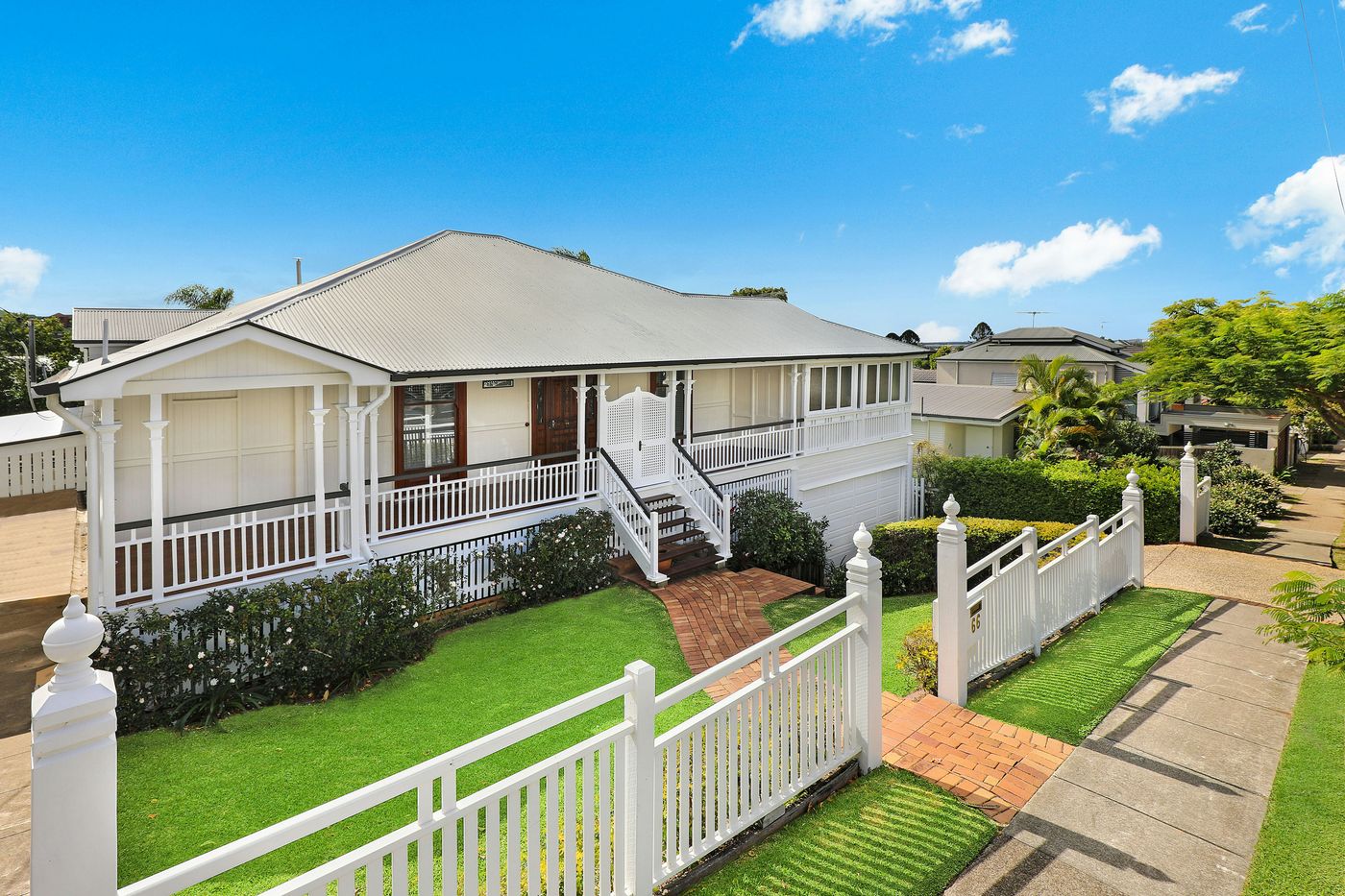
Your house has to emotionally connect with multiple buyers, and where you can, create some competition. So street appeal like your front garden matters while inside, the home needs to look clean, light and spacious.

If you’re thinking that all of this sounds obvious, you’d be surprised how many sellers forget to consider these points, or only do so at the last minute. But planning your property’s emotional appeal should be done well in advance, as ideally, you want to sell within 14 to 21 days of listing.

Your front garden alone can quickly attract, or detract, both drive-by and open home buyers. Neglected outdoor areas can also mean a neglected home.

But a professional maintenance company can mow your lawns, weed your gardens, and prune or trim your hedges and shrubs. Alternatively, you can do this work yourself.

Also consider heading to your local garden nursery and buying pot plants with flowers, herbs, and even small trees. Pot plants can instantly give your gardens a colourful and attractive update and they’re an especially good idea for apartment or townhouse owners where outdoor space is limited.

While tidying your garden, thoroughly clean and declutter verandas, patios and decks. Check for loose nails and damaged areas and clean alfresco furniture.

Declutter and tidy your interior spaces as well, and for spaces that need repainting, always choose a neutral colour. Don’t forget to wash the windows, especially in rooms that don’t receive much natural light. Seal gaps in wet areas and ensure all power points and tapware work.

Before open home inspections, add flowers or other scents and appealing items to your home, and play soft music.

If you have the budget, hiring a stylist can help with presenting your home in the best possible way. Stylists think visually and they can immediately identify what can be done to enhance a room’s appearance. They can also hire furniture for you and organise painting and repairs.

Most importantly, stylists are objective about your property’s appearance, and can give you advice on what changes your house needs to attract buyers in your area, including furniture and general style.

It’s important to remember that while you might not like your stylists’ advice, selling your home isn’t about your style and taste. It’s about ensuring your home appeals to a range of buyers, who will generate competition for your property and help you achieve the best possible sale price.

tasmania

John McGrath – Tasmania’s property strength defies national market slow down

By NEWS

It was encouraging to read this month’s data for Tasmania’s property market, with the Apple Isle’s quiet achievements continuing even as the national sector slows. Compared to Melbourne, Sydney and Canberra, Hobart, Launceston and Devonport have performed quite strongly in the past year, and especially the past quarter.

Cotality’s Home Value Index (HVI) found Hobart’s $756,951 dwelling median followed a 1.4% monthly uptick in July – second only to Darwin’s 2.4% – while its annual values increased 9.3%. This amounts to only a 0.7% drop from Hobart’s price peak of $731,849 in March 2022.

The HVI also noted that the city’s annual rental growth of 8% was the third highest in the country, after Darwin and Perth, as was its 4.3% gross rental yield.

Growth in Tasmania’s regions, including Launceston and Devonport, has been significant too. The HVI showed Launceston’s $598,000-$675,000 dwelling median has seen a 12% to 15% increase over the year. In Devonport, 12% annual growth has taken the city’s average to $618,000.

These three cities are undergoing, or planning, plenty of billion-dollar infrastructure projects as well, with Tasmania’s building and construction pipeline alone now worth almost $40 billion.

The completion of a $200 million terminal expansion development at Hobart Airport is expected in early 2028, with the latest stage – a new arrivals area – opening to passengers last month.

Construction also began last month on Hobart’s new $1.13 billion, 23,000-seat stadium at Macquarie Point.

Major infrastructure works at Devonport include the $493 million QuayLink project. It is planned the first stage of the project will be wrapped up by October, to allow the city to accommodate two new and larger, Spirit of Tasmania vessels in time for summer.

In Launceston, the $130 redevelopment of the University of Tasmania (UTAS) Stadium is well underway and a $43 million update of the 115-year-old Princess Theatre and adjacent Earl Arts Centre also began this year.

Tasmania’s tourism numbers, and spending, continue to grow as well with Tourism Tasmania’s latest data showing visitor numbers reached a record 1.4 million in the year to March. This is up 4.8% from the previous year, and included an exceptionally high number of interstate tourists, while visitor spending figures increased 7.8% to $3.8 billion.

As we head towards Spring, and the overall property market continues to change, I believe Tasmania’s property market will experience further upsides. Recent strong growth on top of affordable values plus a quiet city lifestyle ensure Hobart, Launceston and Devonport will appeal to a range of buyers.

downsizing

John McGrath – Upsizing and downsizing: things to consider before making the move

By NEWS

It’s no secret that our population includes a large number of older Australians, with a Federal government report this month finding the number of people aged 65 years and over rose from 12% to 18% in the 20 years to 2025.

Single-person households have increased significantly since the 1950s as well, with the 2021 Census finding solo occupant properties had escalated to 26% since 1981.

Both groups may join the nearly 2 million people already planning to downsize in the next five years, an uptick of 14% since 2021, according to Downsizing.com data in March.

A report by McGrath Research from earlier this year also found high-net-worth demand for luxury downsizing remains strong.

Meanwhile, our cooling market is providing upsizers with plenty of property opportunities. This new cycle gives these buyers the chance to benefit from less intense buyer competition.

But whether you plan to downsize or upsize in the future, there are several details to consider when making this move.

Retirees who may have lived in the same home for decades can often use the support of family and friends when buying again, particularly those familiar with today’s property market. It’s also important to think ahead about future healthcare and mobility needs, with a single-storey home often the most practical choice.

But there are benefits to downsizing at any age, especially as our cost-of-living crisis continues. Downsizers can enjoy a smaller house with lower mortgage repayments and shorter loan term. Such properties don’t require major ongoing maintenance and offer lower utility bills, council rates, and insurance premiums.

In many cases, people who haven’t moved for years may have built up sizeable equity in their homes. These additional funds can mean more flexibility and freedom to travel or to relax and entertain, rather than maintaining a large garden or organising repairs.

Upsizing presents different challenges, including financial ones. But for families, the extra space and lifestyle benefits often outweigh the drawbacks, making the move worthwhile.

Extra storage areas, larger rooms, and more outdoor space can make a big difference, even to small families. And if more children are on the horizon, the case for upsizing becomes even stronger.

Moving to a larger property can mean moving to a location closer to higher quality schools and other everyday amenities such as shops, parks, transport and healthcare.

But as I mentioned earlier, the cooling market provides the best reason for upsizing. For a start, there is a good chance that upsizers can find better value in this new cycle. Buyer competition has eased, partly because some investors have stepped back following the Federal Budget tax changes. A softer auction market and the traditionally quieter winter selling season are also working in upsizers’ favour.

Whether you’re considering downsizing or upsizing, take the time to assess your options. Your priorities will differ depending on your stage of life, but access to essential amenities such as healthcare, schools and public transport may factor into your decision.

With market conditions shifting in buyers’ favour, there are plenty of opportunities for both upsizers and downsizers to make their next move with confidence.

John McGrath – Consumer Index gives buyers the edge

By NEWS

While the current property market may seem subdued, rising consumer confidence and cooler conditions present ideal opportunities for buyers, particularly in affordable and highly liveable cities like Melbourne, says John McGrath, Chief Executive Officer of McGrath Estate Agents.

Our current property market is not entirely doom and gloom, according to the Westpac-Melbourne Institute Consumer Sentiment Index released earlier this month.

Financial expectations for the future were positive in July, including those centred on property price and interest rate increases.

On a measurement of zero to 200 – with higher figures indicating a more confident market –

July’s overall Index read of 83.9% was an uptick of 4.1% on June’s figures. But it is still almost 10% below July 2025 results, and is a return to the attitude and outlook we last saw in 2024.

At the same time, Westpac commentary about the Index noted that “flickers of optimism are returning”, with most households feeling encouraged about the future, despite their financial position.

Westpac senior economist Matthew Hassan told The Real Estate Conversation that some of this fresh optimism was based on consumer relief that “worst case” scenarios, including higher energy prices, job loss concerns, and interest rate rises, haven’t occurred.

The main reason for stronger confidence this month was lower fuel prices, which returned to their usual figures, following an unfortunately, only temporary, peace deal in the Middle East conflict.

The Index showed expectations for further property price increases have dropped to a three-year low. Sentiment is more positive than it was 12 months ago, despite some uncertainty about interest rates. This is mostly due to the Reserve Bank of Australia’s decision to leave the cash rate unchanged in June, which has alleviated home owner fears to some extent.

Keeping these figures in mind, here’s my take on the Index’s findings. Buyers can take advantage of a cooler market. Competition for housing is already lower than usual, and not just because of the usual quieter Winter season.

I also maintain that individual locations can be very different when it comes to consumer sentiments around their housing decisions. And, locations that may not initially be on buyers’ radars can sometimes provide ideal situations for them.

Melbourne is a perfect example of this. This city has experienced little positive growth since the pandemic, especially when compared to Brisbane, Adelaide and Perth. But this also means its property prices are now lower than these mid-sized cities.

There’s also a good reason Melbourne was named the third most liveable city globally in the 2026 Economist’s annual Global Liveability Index this month.

This was due to the city’s perfect scores for healthcare and education. Melbourne’s scores for stability, infrastructure, and culture and environment were near-perfect as well.

Admittedly, the city lost its high ranking in the pandemic years, dropping to number 10 globally, but it’s fast gained its liveability scores since then. Backed by such strength, I believe that of all our capital cities, Melbourne holds the best promise of repeatedly recovering from dips and challenges in the market.

So, whether you’re keen to buy in a city or regional area, I encourage buyers to keep researching all property possibilities. There are plenty of good options to consider right now, that may not be available in even a few months.


buy

John McGrath – Buying and selling in a cooling market

By NEWS

Weekends have always been a busy time for real estate agents, with auctions as well as open homes for prospective buyers and tenants.

At the same time, we have been experiencing not only a traditionally quieter Winter season but also a market correction and auction clearance rate declines, which have impacted consumer sentiment.

But there’s a reason why I always encourage buyers and home owners not to be discouraged by market corrections, and I’ll repeat it again now: at some point in the cycle, property inevitably rises and falls, so don’t be surprised or scared by these market dips.

As I look at our company’s average days on market, which is one of our key indicators for performance last year at this time, it was 30 days on market for auctions and this year it’s 31. So, virtually little difference and that is quite encouraging.

This is as a result of many of our auctions actually selling within the first two weeks of the campaign. Whereas our private treaty sales have blown out from around 42 this time last year to now 55 this year.

So overall, the auction picture isn’t all bad, with this process still performing well and delivering good results.

Property sales results as a whole at present are a little different to what we’ve experienced in the last few years, and as usual in real estate, sales data and statistics can change dramatically depending on where you live.

A good example of this is our mid-size capital cities – Brisbane, Perth and Adelaide – which remain at their peak after five years of exceptionally high price growth.

For now, sellers should make sure they’re pricing their property to fit the current real estate outlook, and not the one of even a few months ago.

You might see fewer people through open homes or at auctions but buyers who are active at this time of year are usually genuine, committed purchasers ready to make decisions and negotiate with confidence.

This means first impressions and smart advertising are more important than ever.

At the same time, and as I told respected business commentator, Peter Switzer, earlier this month, a lot of people especially investors, are sitting on the sidelines at the moment wondering what the adjusting market – and especially the recent Federal Budget investment policies – will mean for their property future.

If you’re thinking about buying, the current market offers an ideal opportunity to get ahead of more nervous purchasers, and to possibly secure a purchase at a more favourable price.

Another incentive for buyers is that Spring is just around the corner and is traditionally the busiest time of the real estate year.

As I mentioned to Peter Switzer, first-home buyers stand to be the main winners of the Federal Budget changes. In addition, while I think the current correction period will be with us for six to nine months, or even a year, we’re already three or four months into this new period, and it should stabilise early next year.

Finally, while we may see another national cash rate increase this year, Westpac is the only Big Four lender to predict an uptick in 2026.

Both buyers and sellers should remember that regardless of the current state of play, there is no such thing as a perfect time to purchase or market a property. There is also no ideal time to pick the bottom of a property cycle. What’s important, and what won’t change, is that property will always be a great asset.

John McGrath – A property correction to be expected not feared

By NEWS

Real estate has always been a favourite topic of conversation around the dinner table or at coffee catch ups. With so much property noise out there now, these discussions have become even more intense.

Wherever you are in the property cycle, you should know one thing: real estate changes invariably occur. Median values in different areas, including rental yields and vacancies, will move up and down.

In short: if you own, or plan to buy, property, expect adjustments and corrections.

Cotality data shows that the combined capital cities market experienced 10 downturns in the past 40 years. In their May Housing Chart Pack, research director Tim Lawless also highlighted that in this time, all but three capital city declines lasted less than a year. In addition, these dips followed notable increases, which provided a strong buffer against the deteriorations.

This is exactly what we’re seeing now, and it means that despite the recent national flatline, we can breathe a little easy. This is especially true of our mid-range cities.

Cotality’s latest Home Value Index show Brisbane, Perth and Adelaide’s median values are still at their peak, having experienced 75% to 90% growth in the past five years.

As a result, Mr Lawless noted that most home owners are in a relatively strong equity position, with the Reserve Bank of Australia estimating that less than 1% of households were in negative equity at the start of this year.

That being said, Mr Lawless pointed out that newer buyers could be at risk of negative equity as property values fall, especially those who bought via first-home buyer government schemes requiring small deposits.

But as I said in a recent interview, I do have some good news for this group. Generally speaking, they won’t sell again for another seven years – the typical period of our property cycle rebounds – and by that time, values will have doubled again.

Unfortunately, however, NSW and Victoria prices have already declined by 10% to 15% in March alone. I expect we’ll wait at least a year before we see any positive movements in the market too.

Our economy is in challenging, unstable times and many people are struggling. But economising in this downturn can be easier than people might think and might not even require a full budget cut back.

market

John McGrath – End of financial year market review

By NEWS

As we enter a new financial year, it’s a good time to reflect on what the property market has experienced in the past 12 months, and especially in the first half of 2026.

Real estate conditions have undoubtedly softened, with this slowdown beginning in late 2025. Key to this change is the Middle East conflict, stubbornly high inflation, and most recently, the Federal Budget changes to investment.

Yet our long-term, high-performing locations continue to offer excellent results.

As a result, we’re experiencing a two-speed, or even three-speed, market.

According to Cotality’s latest Home Value Index (HVI), Brisbane, Adelaide and Perth’s strong performance has endured, even as national figures flatline. Brisbane and Perth’s median values are now just above $1 million. With its $950,703 figure following a 12.3% yearly upturn, Adelaide shows every indication it will soon join the $1 million club.

At the other end of the market, Sydney is leading the recent downturn, with annual medians only growing 2.3% to reach $1.282 million. Melbourne values are only 3.3% higher than those in May 2021; however, its excellent property supply safeguards its significant spot on Australia’s capital city property ladder.

Darwin is pushing ahead and is now second only to Perth for its annual growth. Hobart and Canberra’s respectable performances persist, with values increasing by 9.3% and 4.3% across the past year.

Regional markets are also resisting price pressure, with Cotality noting every location beyond our capital cities and their metropolitan suburbs is experiencing a peak period of high values.

Meanwhile, FY26 saw the Reserve Bank of Australia (RBA) hand out one tax 0.25% rate cut last August. Unfortunately, we’ve seen three simultaneous rate hikes in the past six months (February, March and May). The national cash rate now sits at 4.35%, a figure we haven’t experienced since December 2024.

There’s a chance we could see another rate increase this year, or in 2027, although Westpac is now the only one of the Big Four lenders predicting another increase in 2026.

As we head into the next financial year, one issue that deserves particular attention is the Federal Budget’s property investment changes. Handed down on May 12, both houses of Federal Parliament cleared the controversial Bill late last month.

It’s no secret that I’m very concerned about the Budget’s major reforms to capital gains tax and negative gearing for investors. Following so many other negative spirals lately, including

the Middle East conflict, these changes will definitely impact potential investors, and renters.

So, we’re likely to see fewer investors in the market, which will place upward pressure on already high rents and struggling tenants, many of whom are potential first-home buyers.

Another possible outcome of the Federal Budget is that owner-occupiers will place greater emphasis on housing as an investment. They’ll either choose to channel more capital into their next home purchase, or upgrade, as confidence in the market improves.

Looking ahead, we will see short-term volatility, followed by longer-term stabilisation and recovery. The market has already begun adjusting with a material pullback, and anecdotal evidence suggests sharper declines than official data currently reflects.

I think we might also see a little bit more of a reduction in capital values in the second half of this calendar year.

Cotality’s latest Pain and Gain report show vendors continue to experience significant resale gains. In the strongest result since 2005, 96% of national resales delivered a profit in the March quarter of this year.

In some good news for investors though, the rental market has enjoyed incredible growth since the pandemic. The latest national rent rise of 5.9% is the highest since September 2024.

The national vacancy rate is now just 1.5% in May, similar to the record lows we saw in 2022 and 2023.

Unfortunately, as house values drop, so too will gross rental yields, bar those in Melbourne, where yields of 3.87% are at their highest level since August 2013.

While recent changes and geopolitical aspects have changed the real estate outlook, there is still a high demand for property across the country, and rightly so. Regardless of global and domestic challenges, owning property remains one of the best ways to enjoy long-term financial prosperity and security.

Millennial

John McGrath – Top tips for Millennial family buyers

By NEWS

Depending on where you live, Winter school holidays are either fast approaching, or have already begun. With our young families now able to relax for the next few weeks, I want to explore their position in our property market.

This especially applies to the Millennials generation – or 30 to 40-year-old mums and dads – with primary school-aged children, or those in early high school.

Let’s start with some basics.

Born between 1981 and 1996, Millennials now make up the largest segment of the workforce in Australia. A well-educated group raising young families, this generation still remembers a time before technology changed everyday life.

And perhaps even more than our younger Gen Xers, Millennials are keen to buy their first home, sooner rather than later – if they haven’t already.

CommBank data released in March showed the average first home buyer is 33 years old, and has a first home deposit of 16% with a loan size of about $480,000.

For most young Millennial families, the ideal home features the same key points, that is, proximity to good schools or childcare centres, as well as amenities like supermarkets, public transport, parks, and medical facilities. They also want a safe, family-friendly layout and location, including outdoor space.

Unfortunately for Millennials, it’s no secret that property values have risen sharply since the pandemic, especially in south-east Queensland, Perth, and Adelaide. Even as national values flatline, according to Cotality’s latest Home Value Index, these locations have experienced annual upticks of between 12.3% to 25.8%. And, only Adelaide still offers median values below $1 million.

Meanwhile, many Millennials are still repaying HECS debts, and may only have a single income, due to maternity or paternity leave.

As a result, many of these young parents are being forced to continue to rent at high prices, or, they’re increasingly seeing homes snatched up by buyers with stronger borrowing power.

But there’s plenty of positive property news for Millennials too.

Firstly, this generation is well-educated. In other words, they’re smart and confident plus they’re well-versed in technology and know how to use it to find their ideal first property.

In further good news for Millennial families, they may be able to enter the property market by different ways and means.

For example, the CommBank data also shows that six in 10 first home buyers now purchase with someone else. With Millennials often married or having a partner, this is good news for this group.

At the very least, first home buyers as a whole are, in CommBank’s words, showing a “growing willingness” to buy with someone else, including friends and family members.

Talking friends and family, Millennial families may also want to consider guarantor support.

This plan allows buyers to lend up to 100% of their home loan from a friend or family member, without needing a deposit. Instead, your guarantor will use the security on their own home as a deposit.

Other options include the range of first-home buyer government schemes open to people of all ages. Some of these, like the federal Help to Buy Scheme and Queensland’s Boost to Buy shared equity scheme, only require a 2% deposit.

City-based Millennial families should also consider looking further afield to regional centres. The growing popularity of these locations has resulted in an increase in amenities that can easily compete with their suburban counterparts.

This includes many top-ranking private and state schools, such as those on the Sunshine and Gold Coasts, as well as inland Toowoomba and Ipswich. Better still, regional hubs usually offer more affordable house prices than their city counterparts.

I certainly believe that that there are more possibilities on offer to young Millennial families than first meets the eye. So, I encourage this group to revisit and reinvestigate their property options.

Gold coast

John McGrath – Gold Coast apartment market flourishes

By NEWS

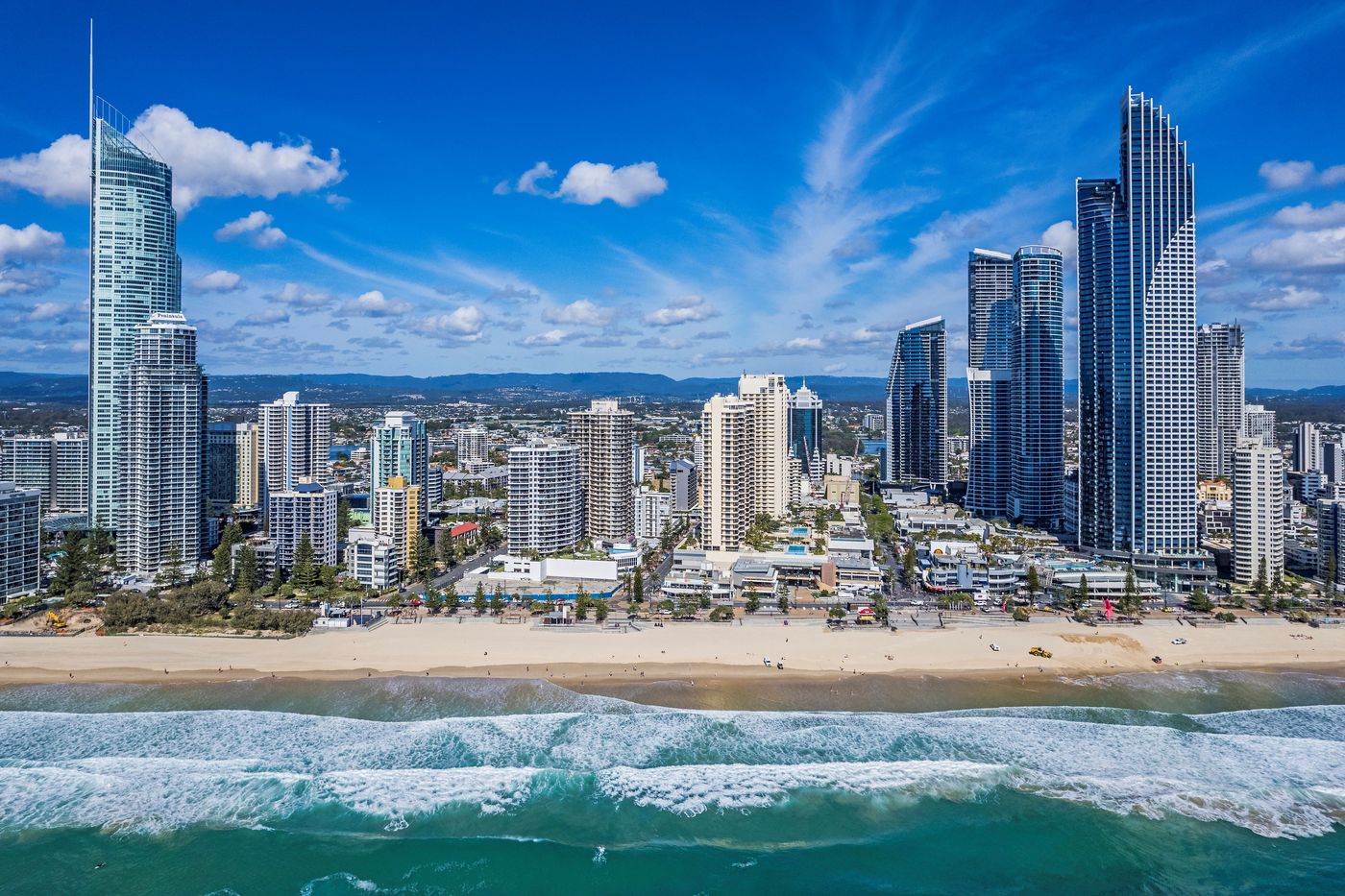
But the Gold Coast also presents an extraordinary opportunity for property growth, especially when it comes to the apartment market.

Driving this area’s popularity even higher is the Brisbane-hosted 2032 Olympic Games, and its $7.1 billion of new infrastructure and updated projects. Some of these projects have already begun, with the new $3.8 billion Brisbane Stadium and National Aquatic Centre breaking ground in October 2025.

Little wonder that Brisbane dwellings now have a median value of just over $1.126 million, after an annual upward tick of 19.1%, according to Cotality’s Home Value Index this month.

It’s also little wonder that the Gold Coast’s apartment market in particular is growing so swiftly.

In fact, the Property Council of Australia’s latest Gold Coast Apartment Pipeline Report found the apartment projects launched last year, were an increase on 2024. Plus, the completion figures for this year, as well as those expected in 2027, are also strong, while the Gold Coast’s population growth remains solid.

In addition, Urbis director Paul Riga commented that the Gold Coast’s apartment sector continued to enjoy positive underlying buyer demand, thanks largely to the premium and luxury market, which is generally less affected by feasibility hurdles.

At the same time, the Property Council report noted that cost and labour constraints are now affecting the apartment sector. And, 60% of the 24 apartment projects launched in 2025 were at “a moderate or high risk of delay or withdrawal”.

Gold Coast: increasing values

Keeping all of the above in mind, it’s hardly surprising that the Gold Coast’s property values have enjoyed an extraordinary rise since the pandemic, in particular.

Cotality’s latest Regional Report found dwelling values on the Gold Coast, including the border town of Tweed Heads in NSW, are now $1,221,237 – an uptick of 12.8% in the year to February and 68.9% in the past five years. This is despite annual sales dropping by 3.2% and 10.5% respectively.

Meanwhile, in an annual upward shift of 3.2%, median weekly rents are now $943, with vacancy rates just 1%.

These figures and the Gold Coast’s lifestyle appeal have resulted in strong interstate migration to the area. This area’s affordability is also appealing to retirees, while families are attracted to the Gold Coast’s range of top-performing schools, both public and private.

I certainly believe that the Gold Coast’s lifestyle and location will never lose its appeal. So, I would encourage potential home buyers to not only study the area’s property data but keep faith in this location’s coastal attractions remains robust.

renovations

John McGrath – High demand for home renovations continues

By NEWS

For the fifth year in a row, we’re seeing a strong appetite for home renovations, with property owners clearly prepared to wear the cost of shifting construction costs, including labour and materials.

NAB data released this month shows the demand for renovation loans rose 16% in the year to April 30. According to the Big Four lender, all major states across the country experienced renovation loan growth with Queensland leading the way at 25%. This was followed by Western Australia (17.9%) and then South Australia (15%), Victoria (10.8%), and New South Wales (10.7%).

Earlier this year, the global construction and property group, Rider Levett Bucknall (RLB), also highlighted that our construction activity remains at record high. And again, Western Australia, South Australia and Queensland enjoyed most of the country’s construction activity,

However these figures don’t take into account the May 12 Federal Budget’s fall out. But NAB did examine the impacts of our ongoing, rising fuel prices, and believes renovation costs could rise again, especially for building materials and transport. While we already know building and labour costs have dropped from their recent high points, labour costs alone have risen by up to 40% since 2019, depending on who you to speak to and what you read.

Renovations are certainly more expensive than they were in the pre-COVID years.

So, at this time, home owners should assess potential renovation issues with extra care, especially regarding finances. At the same time, such updates’ long-term popularity should offer some comfort.

Pre-renovation considerations

The practical tips and tricks NAB offers for home renovators right now are good, but they’re points that I advise every renovator to consider. Namely, include a larger-than-usual buffer in your budget – and expect to use it – and lock in your quotes, where possible. But it’s important to stick with easily obtainable construction materials, and ensure the most important materials are on site before starting a renovation project. Doing this will help to reduce potential delays and extra costs.

You should also think carefully about exactly why you want to renovate, including budget and time factors.

Offering a more attractive property to renters, or achieving a stronger sale, are the usual reasons for renovations. A targeted refurbishment – or, focussing only on specific,

significant areas of your home, such as kitchens and living rooms – is the most cost-effective way to do achieve both possibilities

Alternatively, you might have a list of items that you’re happy to complete over time. For example, painting walls, installing curtains and blinds, or taking up your carpet and replacing it with timber or tiles.

Renovating your current home can be an easier, simpler way to enjoy an upgraded property, especially when compared to selling in a shifting, or slower, market.

Regardless of your reason for renovating, aim to begin with the essential changes, and only renovate or change what you can actually afford. Remember, too, that you may be able to make the updates yourself, rather than hiring a tradie.

But any tradie you do employ – and you’ll legally need them for electricity and plumbing works – should be licenced and certified. And, major structural works, such as property extensions, should be double-checked with your local council first.

As we head into another financial year, I expect renovation popularity to continue, almost regardless of what the future might hold. After all, even smaller, cosmetic updates can improve the overall aesthetics of your home, and with this, your enjoyment and satisfaction of it.

By John McGrath, Chief Executive Officer of McGrath Estate Agents. 

winter

John McGrath – No need to freeze your plans this Winter

By NEWS

Winter has now officially begun and with the new and chillier season comes a traditionally slower time for real estate overall.

But this doesn’t mean you should wait until Spring to sell your home. In fact, contrary to what many people believe, Winter is the ideal time for property vendors.

It’s true that unlike last Winter, both sellers and buyers are facing the possibility of more interest rate increases this year. The recent Federal Budget investor tax changes are also something to keep an eye on.

Yet I maintain that Winter still has plenty to offer vendors wanting to sell. Here’s why.

1. Take advantage of lower stock levels

Plenty of home owners step back from listing their homes in Winter, preferring to wait until the habitually busier, Spring period.

But this doesn’t mean you have to do so as well. By sticking to your sales plans while listings are low, your property will have a much better chance of standing out to potential buyers.

2. Smaller groups of motivated buyers

I’ve said it before, and I’ll say it again: truly motivated buyers will purchase, regardless of the weather. They’ll actively house hunt when other, less interested buyers, stay at home or go on holiday.

So again, Winter can equal a smaller, but committed, group of buyers at open homes. These same buyers are particularly keen to find a home before Spring begins; in other words, they’re keen to act quickly on their next purchase.

3. Show off your property’s best points

Winter’s cooler, shorter days shouldn’t deter from your property’s appeal. With a fireplace, or other heating, your home can still offer potential buyers a warm and cosy ambience.

Gardens where deciduous trees have now lost their leaves can feature inviting places to enjoy too. And, these trees can result in better views across nearby areas, which would be blocked in Spring.

Don’t forget too that in some locations, such as Queensland, Winter offers the year’s best weather in terms of sunshine. While these places can still be very cool in Winter, buyers at open homes won’t have to endure Summer’s extreme heat.

They can also instantly discover the best spots for light and shade throughout the property, which they may not be able to do in other locations.

3. Swifter Winter sale can mean easier Spring purchase

Finally, a fast Winter sale will leave buyers perfectly positioned to buy in Spring. You’ll have money in your hand to purchase again, which is always more acceptable to vendors than a loan – and that’s just for a start.

The concern over how much you might be able to afford will largely, be gone. And, with your recent sale behind you, you’ll know far more about the overall market, and how and what works best for you.

The next three months will certainly allow sellers to enjoy less competition, committed buyers, and the chance to showcase their property in a way they might not be able to do in any other season.

By John McGrath, Chief Executive Officer of McGrath Estate Agents. 

market

John McGrath – What to expect in our changing market

By NEWS

As I’ve noted several times recently, Australia’s property market is shifting. But this isn’t bad news, and nor should it cause you to panic.

I say this for one key reason: the bricks and mortar you live in, or rent out, is one of the greatest wealth-building assets you’ll ever own. This is why the Great Australian Dream of home ownership is still such a significant goal for Aussies.

Admittedly, news for the property market hasn’t been positive lately, with spiralling interest rates making life challenging for homeowners.

But the one thing you can be sure of, is that property can be cyclical, where returns and values will move up and down over time. These changes are also usually due to unforeseen issues, such as inflation, geopolitical unrest – or a Federal Budget.

By all means, be aware of current news, but also study the past and consider the future.

Firstly, it’s true that capital city growth has slowed in the last quarter, especially in Melbourne and Sydney. Yet even these locations’ dwellings have only declined by a respective -1.5% and -0.9% in this period, according to Cotality’s latest Home Value Index. And in the past year, they experienced 2% and 4.2% increases.

Melbourne’s lower price growth and values is also due to its strong, ongoing supply of stock – a highly positive feature in its property market.

As well, Cotality pointed out that while every capital city recorded a slower pace of growth in April, conditions remain highly diverse across major locations. Hence, the “two-speed” market we’re reading about so much right now.

The Commonwealth Bank (CBA) talked about this market in late April. The Big Four lender noted that property conditions were uneven across our capital cities, with Perth, Brisbane and Adelaide growing faster than Sydney and Melbourne.

CBA senior economist, Trent Saunders, told The Real Estate Conversation that the Australian housing market has remained much stronger in the last few years than most people expected. Prices are unlikely to fall nationally, despite the recent slowdown.

“For markets like Perth, Brisbane and Adelaide, fundamentals remain strong,” he said. “We expect growth to slow, not reverse.”

NAB is another Big Four lender to highlight the positives in Australia’s very different range of real estate. In its latest Residential Property Survey, NAB pointed out that while housing sentiment eased in the March quarter, this pullback was only modest.

Overall buyer confidence is still highly positive with the first quarter’s decline following a strong rise over the past 12 months, while our major city locations featured a diverse range of buyer sentiment.

NAB believes the property market as a whole is changing from one of “broad-based acceleration to a more uneven, supply-constrained expansion”.

I hope these facts and figures help you feel more encouraged about your greatest asset, and better prepared for the next changes to impact our property market – and by changes, I don’t necessarily mean negative ones.

Most importantly, don’t panic about the current headlines. Instead, look to the long-term future of your property and what it will give back to you and your family.

By John McGrath, Chief Executive Officer of McGrath Estate Agents. 

regional

John McGrath – Regional Market Update: country homes continue to attract city buyers

By NEWS

As I’ve noted several times recently, Australia’s regional and rural areas are enjoying an extended moment in the sun. By extended, I mean six years of continued popularity, after the appeal of such locations first began to thrive in the COVID years.

The latest Regional Movers Index found the number of capital city-to-regional movers in the December 2025 quarter was the second highest since the end of the pandemic in 2022.

These moves accounted for 11.6% cent of all internal migration, and outnumbered regional-to-capital city moves by 31%.

And, let’s not forget that the growth of regional Australia’s dwelling values has continually outpaced our capital cities since November 2025, according to Cotality’s recent quarterly Regional Market Update.

They continued to do so in the three months to April, with the report showing regional areas experienced a 3.3% value increase, compared to 1.1% in our combined capital cities. And, once again, this growth is mostly due to regions’ affordability and continued internal migration.

These figures are occurring despite the fact that rural hubs are now following our suburban spaces’ slower pace of growth, says Cotality.

In further good news for our smaller towns and rural hubs, the Regional Market Update found that these areas’ easing growth was less severe than that of our capital cities.

I agree with Gerard Burg, Cotality’s Head of Research, who said these results underscored the resilience of regional markets in the face of broader economic headwinds, as well as a clear loss of momentum at a national level.

“Affordability remains a central driver, with internal migration patterns continuing to favour regional areas where buyers can find greater value and a different pace of life,” he said.

Admittedly, capital cities’ rental markets performed better than those of regional hubs.

Cotality figures show the latter locations recorded an increase of 1.8%, up from 1.6% previously, while the combined capitals rose by 2.1%.

At the same time, regional vacancy rates are still very tight at just 1.9%, while gross rental yields remained stable at 4.2% in April, higher than the 3.6% recorded across the combined capital cities.

The report also showed that unsurprisingly, Western Australia continues to dominate regional growth, with the state’s coastal south-western area comprising the most popular towns, or Significant Urban Areas (SUA), in the country.

However, while affordability is one of the key reasons for SUAs’ popularity, there could be more to this situation than meets the eye. Some of these areas actually have higher median values than their closest capital city. Low stock could be another reason for regional centres’ strong sales.

Meanwhile, as I mentioned earlier, the figures in and around our city-to-country movers, and vice versa, are worth noting.

As the Regional Movers Index highlighted, these figures are particularly significant given that December is traditionally a softer relocation period. Yet the report noted that the seasonal drop in capital-to-region migration this year was smaller than the previous two December quarters.

Regional movers are continuing to look to newer, smaller towns for their next home rather than the still highly popular locations of the Sunshine and Fraser coasts in Queensland, and Geelong, in Victoria.

The Waratah-Wynyard region, 245km west of Launceston, attracted the greatest growth in net internal migration inflows in the year to the December 2025 quarter (315%). The Meander Valley, also west of Launceston, was highly popular with city-to-regional movers as well.

The Shire of Bridgetown-Greenbushes, south of Perth, recorded a 150% increase in such moves, with Loddon, in rural Victoria, experiencing a 25% lift.

While fairly unsurprising, these figures should nevertheless give our regions and their home owners, some much-needed encouragement and reassurance. Six years of strong growth is impressive, especially for places like Tasmania, which has generally faltered in recent years.

Along with the extraordinary growth we’re seeing in Western Australia’s and Queensland’s smaller townships, the growing popularity of regional Tasmania makes it one to watch in the future.

By John McGrath, Chief Executive Officer of McGrath Estate Agents. 

homeowners

John McGrath – Homeowners’ strong position will help in softer conditions

By NEWS

When you’ve been in real estate for as long as I have, the latest Cotality data isn’t surprising. After all, property is a long-term game where the market is subject to several cycles along the way.

That being said, I empathise with property owners’ uneasy time right now. Not only has the Reserve Bank of Australia (RBA) increased interest rates three times this year, but high petrol prices due to the ongoing Middle East conflict are exacerbating cost-of-living pressures.

Does this mean potential buyers shouldn’t purchase a home, or owners should sell their property? Not at all.

But I would encourage these people to study the long-term effects of pressures and downturns on the property market over several decades, not just a few years.

Doing this will definitely help both possible buyers and current owners remain calm and not be deterred.

In a similar way, Cotality research director, Tim Lawless, recently explained how these two groups are facing both bad and good news at the moment.

The latter was noticeable in Cotality’s latest Monthly Chart Pack, which showed that median dwelling values rose quite strongly across the year in our capital cities. But even so, Australia’s property market is on the cusp of a housing correction, as interest rates and serviceability pressures, along with affordability, take hold. As a result, we’re seeing softening demand and more listings

But he adds – and I agree – that home owners should survive this reset better than they think, thanks mostly to the strong, recent growth in home values.

Cotality emphasises that this has left most homeowners in a relatively strong equity position, so a material pick up in distressed sales or mortgage arrears is unlikely. Plus, as this latest data pointed out, mortgage arrears at the end of 2025 were still lower than the record high in mid-2024, when interest rates were similar to what they are now.

The best news, however, is that Australia’s housing downturns are both relatively few and short-lived. According to an analysis of Cotality’s monthly Home Value Index, our combined capital city markets have recorded just 10 of these corrections over the past 40 years. And, almost every individual capital city’s decline in this period lasted less than a year.

Mr Lawless did express some concern for recent buyers, who may not have had years to accrue value on their home or pay down its principal. They could therefore be at risk of experiencing negative equity, as home values drop. First-home buyers may also have purchased with a small deposit via a government deposit scheme.

Helping these and other buyers, though, is the focus that they place on mortgage repayments. As a result, Mr Lawless believes borrowers are more likely to adjust spending in other areas of their lives, rather than ending up in mortgage arrears.

While I don’t deny it’s a challenging time to be a homeowner or buyer, it’s crucial to look beyond short-term statistics. By all means, study this data, but also explore long-term housing declines and growth, and how these impact the market – and may affect you and your family.

Make sure you have a financial buffer for your mortgage repayments and be prepared to cut back in other areas if you need to.

More than 40 years in real estate has taught me that the property market consistently rises and falls but even when it declines, it always normalises again.

By John McGrath, Chief Executive Officer of McGrath Estate Agents. 

melbourne

John McGrath – Melbourne: delving beyond the data

By NEWS

I have previously talked about Melbourne and what it offers to our country’s many eager buyers. As I said then, this capital city can give buyers key opportunities that other, more popular, cities can’t, such as a strong property supply.

At the same time, Melbourne has experienced far slower price growth in the past few years than other capital cities across the country, according to various reports and statistics.

This curious combination is why I want to discuss Melbourne again today. For a start, Melbourne offers a good case for how a strong, long-term supply of housing can significantly impact the market, and in doing so, help buyers.

But first, to the latest Melbourne data from Cotality’s May Home Value Index report, bearing in mind that autumn is a traditionally quieter season for the overall property market. In addition, April included the Easter long weekend while some states had an Anzac Day long weekend too.

Melbourne houses are now selling for a median of $972,734, following a 2.5% annual increase. This is the lowest median in the country, bar Hobart and Darwin, and the lowest growth rate of all capital cities. Melbourne’s unit median of $641,690, after a 0.9% yearly rise, remains one of the lowest, excepting Hobart, Darwin and Canberra.

Meanwhile, in the rental market, the city’s annual rental growth is now outperforming value growth, with the average gross yield on a Melbourne house now 3.25% – the highest figure since March 2015, says Cotality.

So, what do all these figures mean for potential buyers in Melbourne? Well, both luxury and first home buyers are succeeding in this city.

According to Knight Frank’s recently released Wealth Report 2026, Melbourne is one of only two major cities or hub in the world – the other being London – where buying power has increased, rather than dropped, in the past five years.

For international buyers, in particular, the value proposition remains genuinely compelling. Price per square metre across Sydney, Melbourne and Brisbane compares favourably with London, New York, Singapore and Hong Kong.

But Melbourne presents its own opportunity. A modest softening in prices over the past five years has improved buying power at the top end, making it one of the more attractive entry points into a global-tier city at this moment.

And, Australia offers world-class lifestyle credentials while still trading at a meaningful discount to many of its global peers.

Melbourne’s strong property supply also makes it unique. In addition, this supply has been ongoing for many years, with Australian Bureau of Statistics data showing that at least 55,000 homes have been built every year across Victoria, for a decade.

In a recent article for the Real Estate Institute of Victoria, property strategist Cameron Kusher says that the city’s high volume of new, and incoming, listed properties is a key contributor to Melbourne’s much weaker price growth, compared to other capital cities. This high volume is also giving buyers more choice and less competition.

SQM Research shows that in March alone, there were 19,940 newly listed properties in Melbourne – the highest figure of any capital city. The southern city also experienced the largest annual boost of new listings, and a far greater increase than the national 5.4% uptick.

Helping to boost the housing supply is the shrinking of Victoria’s rental market, as investors sell their properties due to land tax changes and tighter rental laws. Yet the combination of less rental listings, federal and state government incentives, and budget-friendly prices, have resulted in more first-home buyers entering the market.

It’s for these reasons that I consider Melbourne to be a city well worth watching this year, and beyond. I also encourage potential buyers, including investors, to look beyond Melbourne’s less than impressive statistics and data in recent years, as there is definitely far more to this city than first meets the eye.

And, after all, this is a city that in 2025, and for the third consecutive year, Economist Intelligence named one of the top five most liveable cities in the world.

By John McGrath, Chief Executive Officer of McGrath Estate Agents. 

homeowner

What is driving the modern Australian homeowner? – John McGrath

By NEWS

Today’s property market presents a great divide between us and our grandparents. But are the reasons and motivations for buying property today still the same as they were 10, 20, or 30 years ago?

While Cotality’s Women and Property 2026 report shows that today’s potential property buyers are a mixed bag, it offers plenty of real estate opportunities for buyers and owners of every age.

For a start, three-quarters of Baby Boomers (62 to 80 years olds) have a mortgage, compared to 35% of Generation Z buyers, or those in the 14-to-29-year-old bracket.

The report also found a third of Gen Zers are renters, while another 30% live with their parents, making them the most likely of all age groups to do so.

According to Cotality, property costs and limited knowledge of the property market are the main reasons why younger people are abandoning the traditional great Australian dream.

Less than four in ten Gen Zers believe property ownership is important – a sharp difference to the one third of Baby Boomers and Gen X buyers (45- to 61-year-olds) who believe the opposite.

On the other hand, some of these earlier generations remain keen to buy a house, especially when it comes to investment opportunities. Cotality found that Millennials (those born between 1981 and 1996) own one quarter of residential investment properties – a higher figure than Baby Boomers, Gen Xers and Gen Zers.

Meanwhile, property costs aren’t just limiting younger people’s abilities to purchase a house – it’s restricting their updates to coveted energy efficiency details. And, these details are becoming more important to home buyers of every age.

Over three in five of property owners have improved their new properties’ sustainability in some way, with popular changes including the installation of solar panels, double glazing and insulation.

So, what does all this data point to? First and foremost, I would encourage Gen Zers not to be discouraged by Cotality’s findings. As I mentioned earlier this year, this group is a highly tech-savvy one, and is determined, confident and focussed.

Westpac’s Home Ownership Report in November 2025 showed 35% of Gen Zers plan to buy their first home within five years, up 5% since January 2025. In addition, more than half of Gen Z buyers (55%) are considering rentvesting.

Other generations should also be encouraged by current times, especially when it comes to the extraordinary number of property reports, statistics and data we now have at our fingertips.

It’s true our grandparents enjoyed more affordable real estate prices, but they also experienced Australia’s highest cash rate of 17.5% in January 1990 and a near-record inflation level of 17.7% in March 1975.

But technology alone has given today’s generations an excellent reason to appreciate the 2026 market for what it can offer smart people of all ages.

Investor

The importance of being a disciplined investor – John McGrath

By NEWS

It’s not surprising that for several years now, renter and investor issues have been a popular conversation at dinner tables and get-togethers. After all, one in five Australians now own an investment property, according to the latest data from Westpac.

In other promising news for investors, this year’s PropTrack Westpac Investor Report, released last month, showed these buyers were active in 2025, with the number of new investor loans increasing by about two-thirds from its early 2023 low point, based on Australian Bureau of Statistics (ABS) data.

And, while rent growth has slowed since 2022 and 2023, the report noted that in the final few months of 2025, 93% of investor resales returned a profit to their vendors – the highest level in at least a decade. This trend was particularly notable in Brisbane, Adelaide and Perth.

Westpac managing director for mortgages, James Hutton, explained the overall rental situation was based on investors adapting to more stable conditions and becoming disciplined and confident, even as challenges like tight rental conditions continued.

Cotality’s latest Rental Review highlighted that national rental listings are around 18% below their five-year average, with this shortage especially prominent in Sydney and Melbourne.

As a result, tenants are now spending a record 33.1% of their pre-tax income on rent. This is up from 26.2% in September 2020 and comes despite a moderation in rent growth throughout most of 2024 and into mid-2025.

Despite these facts and figures, the tips on how best to succeed as a landlord remain the same.

First and foremost, buy objectively. Unlike buying a home you will live in, including details that you really want, your basis for buying an investment property should be how to attract renters.

I always suggest to investors that they look for a property in an area they know well, and that is close to quality infrastructure and amenities such as transport links, shops, schools, and health and medical hubs.

Houses will generally return higher capital growth than apartments in the long term, due to their land value. However, as the PropTrack Westpac Investor Report 2026 points out, half of all rental properties are apartments or semi-detached homes. This low-maintenance option might also suit you and your budget better than a house.

Whichever property type you choose to purchase, always aim to buy the best quality property possible and ensure you research the market thoroughly before purchasing, including talking to your local sales agent.

Most importantly, don’t be frightened by the current statistics into selling your investment property after only a year or two. As with any investment, and all real estate, property investments will return the best value to their owners over time.

Capital growth alone takes a while to appreciate, plus a long-term investment will allow you to ride out any market corrections and ideally, enjoy consistent, strong value.

Auction

Auction or private treaty: what’s the better option for you? – John McGrath

By NEWS

If you’re planning to sell this Autumn, you and your agent will need to decide whether you’ll sell via auction or private treaty. Some agents will advise you that an auction’s competitive atmosphere guarantees the best price. Others will say a private treaty sale is the more effective way to achieve this.

While there is truth in both points of view, I don’t believe there is one generic best way of selling. Whether an auction or private sale will work best for you is dependent on a number of unique factors, including your home and your sales expectations.

This is not forgetting the property market itself. For example, in a highly competitive buyer’s market, auctions are best for properties that are in strong demand or that are hard to put a value on. Auction campaigns are also the best method for vendors seeking a result within a defined timeframe, as they typically mean a 30-day turnaround, culminating in a one-off auction event.

This fixed date, along with auctions’ pressure and emotional tension will motivate buyers to act quickly. These buyers’ psyche is different to those of private sale purchasers too.

Once they know the property’s price guide, auction buyers will often start thinking how much more they’re prepared to pay to own it. The competitive nature of auctions also means buyers think emotionally, rather than objectively, especially if they’ve already fallen in love with the property. This often results in a much higher sales price for the vendor.

In addition, unlike private sales, auction purchases have no cooling-off period with the buyer required to pay a deposit and sign a contract immediately after the event. This gives buyers the chance to own a property faster, without prolonged negotiations.

But auctions are usually more stressful for vendors than private sales. Campaigns only run for three to four weeks and end in a tension-filled event where you might have to make some swift and significant decisions.

For a start, you’ll need to decide on your property’s reserve price beforehand. Your agent can help you decide on the best figure, based on market feedback. But this price is important as your auction won’t be successful unless bids reach this amount.

If they don’t, you’ll have to decide whether to modify the reserve at the auction or to pass in the property. If you choose to do the latter, you and your agent will negotiate with the highest bidder in private to reach an acceptable price, just as you would in a private sale.

Both situations can be tense for vendors, who may already not be comfortable with auctions being so public. As a result, private sales might be a more popular method as they enable vendors to keep their sale price private. And, even though negotiations might take longer, private sales allows vendors more time to consider competing offers from buyers.

Often, buyers who purchase via private sales can typically be more cautious than comparable auction buyers. They know vendors include a negotiation buffer on their preferred value so their sales offers will be lower, rather than higher, than the price guide.

With both auctions and private sales having good and bad points to consider, the smartest thing you can do is consult with your agent. Ask them why they have recommended an auction or private sale, and discuss any concerns you have with these options. Remember a good agent is there to support you through the process and guide you as to current market conditions.

new

John McGrath – Why buyers are choosing new builds over existing homes

By NEWS

The new housing market continues to attract home buyers, especially those buying for the first time. There’s good reasons for this, including government assistance programs. Buying brand new can also mean less stress and gives buyers the option of moving into “turn key” or ready-built properties, often in rapidly growing locations.

The latest NAB Residential Property Survey highlighted that in the June 2025 quarter, first-home buyers (FHB)s’ market share of new housing increased to 40%. Up from 34.2% in the March quarter, this is the highest new housing figure for FHBs since December 2022.

Unfortunately, high construction, infrastructure, labour, and land costs continue to delay new development. The Housing Industry Association (HIA) and Cotality’s Residential Land Report in February showed that residential land prices across the country have escalated by more than 500% since 2000. Construction costs and the cost of skilled labour grew by around 150%.

At the same time, these issues haven’t swayed new home buyers, with another HIA report finding that new home sales in the five largest states reached a three-year high in September 2025. Sales in the three months to October 2025 were also 8.1% higher than the previous quarter. And, while the volume of these sales dropped by 9% in October itself, they were still higher than any other four-week period in recent years.

Yet government schemes alone mean it’s unsurprising that new builds are attractive to FHBs, with First Home Owner grants enabling them to enjoy a substantial reduction on buying or building a new property.

House and land packages, especially those in outer-ring locations, can hold more appeal to FHBs. For a start, these plans can result in less short-term buyer stress, with some developers offering standard property layout designs with fixed colours and materials. Other developers offer “turn key” or ready-built houses. New build buyers can also choose from infill or greenfield developments, or off-the-plan townhouses or apartments.

These positives can negate the need for costly and worrying short-term renovations, at least. In addition, newer areas offer the potential of high appreciation and good rental appeal.

Ripley Valley, in Ipswich, west of Brisbane, is a perfect example of just how popular such new locations can be. The former farmland location was designated as a Priority Development Area in 2010, and is now one of Australia’s fastest-growing urban locations with up to 50,000 new properties approved for the area. It is also forecast to house 120,000 people or more by 2040.

Since major building works began in Ripley in 2010, property prices have rapidly increased as well. Older houses in the region sold for around $300,000 in 2010, but some particularly large properties have sold for $1 million and more in the past few months, according to realestate.com.au.

On the other hand, there are hidden costs to new builds. Think developer margins, unexpected construction expenses and delays, and marketing and other fees, including the price of purchasing the land. You will also need to find a reputable development company and builder.

I certainly believe we’ll see more house-and-land packages, turn key properties, master-planned communities, and similar in the future. So, if you are keen to buy a new home, there are plenty of options, and locations, to choose from.

By John McGrath, Chief Executive Officer of McGrath Estate Agents. 

co-owners buy

John McGrath – Buying property with friends or family

By NEWS

Co-owning a home with a relative or friend is becoming increasingly popular, particularly for first-home buyers and younger people, with this option offering a swifter, smoother journey to homeownership. And, I’m not talking about financial help from the Bank of Mum and Dad.

The latest data from NAB shows that joint home loans between friends and family members increased by more than 33% between August 2024 and July 2025. The highest growth was in Victoria (up 47%); South Australia (37%); and New South Wales (34%). Western Australia and Queensland’s joint home loan uptick was also high at 30% and 19% respectively.

I would only expect such growth to continue this year, as property prices continue to rise. Then, there’s our 4.1% cash rate, which the Reserve Bank of Australia (RBA) raised in both February and March this year – its first increases since November 2023 – and could do so again later in the year.

Home loans such as the Commonwealth Bank’s Property Share option are helping to drive co-owner popularity even further. Property Share allows up to four relatives or friends, including investors, to buy a property and split the cost in any way they choose.

It also allows the group of buyers to retain individual control of their finances with the one property secured by each owner’s separate, preferred loans. In this way, the co-owners are only responsible for their share of the mortgage.

But generally speaking, there are two different kinds of co-owner loan structures. While you may be able to switch from one to the other, if relationships suffer or other problems come up, both structures still ask co-owners to act as guarantors for each other, regardless of their stake or share size in the property. So, if one owner can’t make mortgage repayments, or similar, the other owners must do so on their behalf.

In a joint tenancy, each person owns an equal, or even, share of the property, and has a 100% stake in it. Co-owners need each other’s permission to sell their part of the home, as well as needing to check with them on any decisions regarding the house. If one owner dies, ownership is transferred to the remaining owners.

These points are key reasons why joint tenancy is popular with married couples and other de facto relationships.

Meanwhile, siblings and friends most often opt for tenancy-in-common loans, which offer co-owners the option of having either equal or unequal shares in the property. In this way, they may have different stakes in the home. For example, if someone only has 20% shares in the property, they will only own 20% of it.

Each person can transfer their share of home ownership to someone else, without asking permission from their other co-owners. And, if one owner dies, their stake in the property can be transferred to someone else.

Obviously, there are major benefits and disadvantages to both types of co-owner loans, and what’s right for one couple or group of friends may not work for another. Certainly, the most significant benefit to co-ownership loans is being able to own a home sooner, with a larger choice and budget as well as a lower deposit, and smaller mortgage repayments. Your future bills, including council rates, can also be shared with your co-owner.

But co-owners also need to remember that they are financially liable for the entire home’s mortgage and other debts, including property taxes. So, if you’re considering any kind of co-ownership, think about your emotional and financial relationships with these people.

It’s a great idea for co-owners to be long-term, trustworthy friends. But more importantly, these people should have similar goals and lifestyles to yours. You should also appreciate similar property styles, locations, and share the same renovation and management priorities. Finally, as with any type of home loan, you’ll need to look at exit strategies, legal issues, and tax implications, especially if you’re an investor.

If you examine these details first with your co-owners, you’ll have everything in train for a successful homeownership journey, much sooner than you might have thought possible.

By John McGrath, Chief Executive Officer of McGrath Estate Agents. 


Autumn

John McGrath – Don’t cool your property plans this Autumn

By NEWS

Cotality’s latest Home Value Index found mid-sized capitals Perth, Brisbane, and Adelaide, continue to achieve excellent month-on-month growth of more than 1%. Perth’s median dwelling value of $989,211 is now the third highest in the country, after Sydney and Brisbane.

In comparison, Sydney and Melbourne’s monthly growth stabilised and dropped below zero across the past quarter, with median dwelling prices standing at $1,296,039 and $826,132 respectively.

Tim Lawless, Cotality’s research director, noted that these cities’ vendors are more motivated to sell, and the flow of new listings could strengthen in the lead-up to Easter.

This brings me to the autumn holidays of Easter and school breaks. Anzac Day also falls on a Saturday this year, so some states and territories are observing an additional public holiday on Monday, April 27.

These holidays will result in the usual drop in open homes and auctions, but I’ve always maintained that long weekends, and similar, rarely deter committed buyers. Equally, there can be a strong ramp up and rebound in these events prior to, and after, long weekends.

Cotality’s weekly market auction report last Monday found more than 4,000 homes were currently scheduled for auction this week, with the period before Easter typically marking the seasonal high point in auction activity across the country.

Yet this stands against the backdrop of an increasingly nervous property market. Two cash rate rises this year have almost eradicated the three cuts the Reserve Bank gave us in 2025. We’re already back to the February 2025 figure of 4.1%.

While geopolitical issues have resulted in a volatile stock market, we may see a move towards bricks and mortar becoming an even more attractive asset class.

Back to the basics of autumn selling, I maintain that cooler temperatures don’t mean autumn is a bad time to sell. Keen autumn buyers won’t be deterred by colder weather. But the window-shopping people will be, which gives vendors a better chance of a faster sales result.

I’ve also seen the Autumn property market described as a transitional season. It’s quieter than our traditionally active Spring and Summer, but not so quiet as Winter can be. Christmas is well behind us and children have gone back to school, giving buyers more time and space to consider their property decisions.

The end of the financial year is also not too far away, which is an important consideration especially for property investors. Queensland and other northern locations are just beginning a cooler, but sunnier season, which makes attending open homes and auctions far more appealing than summer ones.

This brings me to some of my most important Autumn tips. As I mentioned this time last year, don’t be dismayed if you’re a Sydney and Melbourne vendor, or in another area where the local market is weakening.

Instead, focus on setting a reasonable and attractive price for your home. Your agent can help you compare prices with similar properties nearby and understand values in your area.

A strong marketing campaign and excellent presentation is also important. And, here’s where cooler weather can help your property.

Autumn gives sellers the chance to show that their property easily stays warm and dry – a crucial point for buyers in many locations. And, wood, or even electric or gas fireplaces, can easily give your home a cosy ambience on a chilly day.

Even with the recent cash rate increases and some flatlining growth, as well as several holidays, there’s plenty of great reasons to stay positive this Autumn.

Vendors should expect to enjoy genuinely strong competition this season, and for buyers, this cooler, quieter period is the perfect time to make smarter property decisions than you might have made in hot, hectic Summer or Spring.

By John McGrath, Chief Executive Officer of McGrath Estate Agents. 

regional

John McGrath – Regional property values out-perform capitals once more

By NEWS

It’s been pretty interesting to see how our regions have become the one and only place to be for hundreds of city buyers recently. The latest Regional Movers Index found capital-to-region migration accounted for 11.5% of our biggest relocations in the September 2025 quarter. In comparison, region-to-capital moves totalled just 8.4%.

The regional attraction include generally lower values than city counterparts. Government-funded projects are also improving many of these towns’ infrastructure and amenities.

The move from onsite to work from home and hybrid employment is strengthening the appeal of regional and rural locations. So too, is the appeal of a quieter, more relaxed lifestyle.

Cotality’s quarterly Regional Market Update showed regional location values overtook capital cities for the first time since August 2025 – a month when they had already achieved a nine-month run of dominance against the capitals.

Regional dwelling values lifted 3.2% over the three months to January, compared with 2.1% across the combined capitals. This notable growth followed another positive shift in the three months to October 2025, when our regions achieved the highest rate of combined growth in more than three years.

According to the report, combined regional rents are also rising faster than those in capital cities. Rentals increased 1.6% over the quarter and over the past five years, have gone up nearly 42%.

Meanwhile, regional Western Australia was the strongest individual state or territory performer, posting a 6.1% uplift over the quarter, up from 4.9% previously. Its gold-mining centre, Kalgoorlie, continued to appeal to capital city buyers with values increasing 18.8% in the year to January, and 7.6% in the last quarter, to reach a $429,575 median.

But in the list of long-term, in-demand regions, it was Wagga Wagga in NSW’s Riverina area that stood out in the Regional Market Update. Home to around 70,000 people, and located 250km west of Canberra and 130km north of Albury, Wagga Wagga was Australia’s strongest individual property market in the January quarter. Properties are now selling for a $665,026 media, after dwelling values increased 8.1% in the quarter, and 14.9% in the past year.

Overall though, values in NSW’s regional areas, along with those in Victoria, remain largely unchanged, after muted achievements in the previous quarter. Both states featured the nation’s only localised declines including NSW’s Bowral-Mittagong (-2%) and Batemans Bay (-0.4%) and bayside Warrnambool in Victoria (-0.4%).

So, what’s next for our regional towns’ property markets? Based on the last few years, or even the last quarter, I suspect inland towns, such as Wagga, will continue to out-perform capital cities. And, as vacancies remain tight for regional renters, rents are likely to rise faster too.

Equally, I wouldn’t be surprised if property markets in Western Australian and Queensland rural centres further exceed expectations. Government-funded projects will help to advance these areas’ positive outlooks too. I’m certainly looking forward to what this year, and beyond, will bring to Australia’s regional property markets.

By John McGrath, Chief Executive Officer of McGrath Estate Agents. 

Gen z

John McGrath – Gen Z buyers increasingly focus on investment possibilities

By NEWS

I’ve talked recently about 46-60-year-old Generation X (Gen X) or the “sandwich generation”, and how this group is shaping current and future housing, including government policies.

But following close behind Gen X is the very different Gen Z group, who are also significant, albeit for dissimilar reasons. For a start, don’t be fooled by Gen Zers’ younger age of 14 to 29 years old.

Gen Zers are actually a determined, confident and focused cohort who have a stronger understanding of politics, ethics and similar than their parents or grandparents did at the same age.

This is partly because Gen Z is the first generation to have experienced the internet, mobile phones, and social media, since birth. Hence, this tech-savvy generation has plenty of discernment and insight, especially when it comes to financial issues such as buying a home.

This is pretty impressive considering Gen Z is facing far higher prices for both renting and buying than any other generation before them, relative to their wages. They’re certainly far less likely to own a home in their 20s than even their parents.

Honing in further on Gen Zers, a Regional Australia Institute and YouGov survey last month found 40% of this group were prepared to move from metropolitan locations to regional areas, largely because of the latter’s more affordable housing and cheaper cost of living.

At the same time, Westpac’s Home Ownership Report in November 2025 showed 35% of Gen Zers plan to buy their first home within five years, up 5% since January 2025. In addition, this group is finding plenty of reasons to buy. Motivations to purchase include a desire for independence (37%); financial security (34%); and not wanting to rent forever (32%).

More than half of Gen Z buyers (55%) are also considering rentvesting. This purchasing opportunity means buyers buy an investment property in an affordable area, while simultaneously renting a home in a more desirable, but possibly more expensive, location. In other words, you’re an investor and a tenant at the same time. Or, you could say, rentvesting gives buyers the best of both investing and renting worlds.

Equally, rentvestors need to ensure their budget covers their own rent plus their investment property’s maintenance and other costs. These can include possible property manager and strata fees, as well as landlord insurance. Most importantly, not every lender offers specific investment loans, and as these loans are also considered to be riskier than owner-occupier ones, they often mean higher interest rates and stricter lending conditions for borrowers.

But in good news, investment tax benefits can balance out these costs, as can the excellent home ownership benefits for rentvestors. It’s definitely no surprise that rentvesting is popular with tech-savvy, Gen Zers, who are keen to buy property in the smartest, and best, way possible.

Apartment

John McGrath – Apartments vs detached houses: which one should you buy?

By NEWS

Easter is now only a month away, and the real estate market is well into another strong stride for this year, with Cotality highlighting the last week of February was the nation’s busiest period of auctions since late March, 2025.

Some of these auction buyers are likely to be entry-level renters who I expect will enter the market this year as first home-buyers, and look for properties within their budget, in particular, apartments and townhouses, rather than detached homes.

But every buyer should think carefully before buying either type of property, as both come with benefits and advantages.

Starting with the basics, Cotality’s latest Home Value Index found that Sydney’s median apartment value is now $903,080 – an attractive figure when compared to the city’s median house value of $1,607,046. These numbers follow a respective annual lift of 2.7% and 5.5%. At the other end of the real estate market, Hobart features similarly divergent figures of $574, 204 and $779,059, after yearly increases of 5.5% and 8.1%.

But the initial purchase price is just one part of the story, when it comes to these two types of properties. Apartment’s smaller spaces can perfectly suit singles, couples, or small families. Another advantage is their central metropolitan locations, closer to employment opportunities, transport, and other amenities.

The possible disadvantage to them lies in their mid to long-term impact on finances and other important details. So, these should be considered before buying an attached home.

Firstly, while initially more budget-friendly, strata, or body corporate, fees can result in these owners’ costs being almost as steep as those of a comparable detached home buyer.

It’s true these fees include crucial building insurance, which any owner needs. But potentially high fees don’t necessarily equal abundant on-site amenities such as pools and gyms.

Another consideration with apartment living is that while costs for general maintenance and updates are shared between owners, the choice of which company to choose for this work, and when and how it is done, is also shared between owners.

This brings me to a similar point about body corporates. Owners may have to apply for, and receive, approval from other owners if they want to renovate their home, or modify the exterior of their property.

Meanwhile, detached houses’ have benefits and advantages too. Obviously, their initial price will be much higher than those of attached houses. Council rates will be higher, as well.

At the same time, their land size alone – even if it is small – means houses will generally appreciate better, and faster, than attached properties. And, while rarely available, or built, in central city areas, houses can be found almost anywhere else and still be close to amenities.

Most importantly, detached house owners won’t need to pay body corp fees, so in this way, they can enjoy extensive freedom – and space – when it comes to updates, renovations, and pets. This of course means you’re responsible for all maintenance issues but you can also choose who best will suit your budget, and similar, when it comes to tradespeople.

At the end of the day, there’s no right or wrong answer as to what property is best for which buyer. What is important is considering the short, mid and long-term impacts of where and what you choose to buy, especially when it comes to finances. Remember, too, that every home has its good and bad points. Take the time to enjoy your new home and enjoy it for what it really is: a place you can make your own, and a significant financial step ahead in wealth creation.

By John McGrath, Chief Executive Officer of McGrath Estate Agents. 

energy

Compact, energy efficient, flexible: the new Australian home – John McGrath

By NEWS

Australia’s property market is changing fast, with strong housing gains and values across the nation generally being the norm. Yet our properties themselves have also undergone major transformations in recent decades.

The typical Australian home is no longer large, brick veneer and freestanding, on a generous block. Instead, we’re increasingly seeing compact and energy-efficient properties, designed for both living and working, rather than size.

The cost of living and building expenses are helping to reshape properties as well, while the greater number of apartments and townhouses in the property mix has further attracted budget and compact-friendly buyers.

So, what do these changes mean for the current and future property market? Does the typical Australian home still have a future, or not? We discuss these issues, and our homes’ major modifications, in our McGrath Report 2026.

According to the Housing Industry of Australia (HIA) in February 2025, while the days of ever-growing suburban homes are not yet over, detached homes are certainly no longer experiencing a size boom. The average size of Australian dwellings has been on a steady, though modest,  decline over the past 15 years, according to Australian Bureau of Statistics data.

Australians are now opting for smaller living spaces due to consumer priorities, economic challenges, and a greater emphasis on efficient land use shift. There is also a greater proportion of apartments in the overall dwelling mix.

A sharp lift in land prices has driven the appeal of smaller homes, too. Last month’s HIA-Cotality Residential Land Report found residential land prices grew by more than 500% since 2000. As a result, the median capital city lot size of 391m² in late 2023 presented an 11.1% drop since  2013 and 33.8% since 2003.

Meanwhile, climate change concerns have seen energy efficiency and sustainable living become more important to both buyers and builders. This includes a greater interest in cost-effective, sustainable building materials and construction processes.

More people are incorporating recycled materials – such as reclaimed steel, glass and timber – into structural and finish elements. Engineered timber is gaining traction as well, as it offers a compelling economic and environmental choice.

Solar power is also becoming more popular. According to last month’s Clean Energy Council’s Rooftop Solar and Storage report, 183,245 solar batteries were sold across Australia in the second half of 2025. This record figure is more than the previous four years combined. Plus,  rooftop solar power’s electricity generation across nearly a third of Australian homes – or more than 4.3 million households – has doubled since 2020.

This increase is thanks partly to a range of government rebate schemes. One of the newest of these is the federal government’s Cheaper Home Batteries program, which launched in July 2025 and gives households, businesses, and community organisations a 30% discount on installing small-scale battery systems.

And, more properties now have power-saving appliances such as energy-efficient lighting and electric heat pumps, rather than traditional gas systems, and smart home monitoring technologies.

So, it’s hardly surprising that owners and developers are no longer treating energy efficiency as an optional add-on – it’s now a core requirement. Home buyers should therefore expect the same inclusions and details in their new home, both now and in the future. Sale prices and buyer attention may also be higher on these properties.

Certainly, the great Australian dream is no longer defined by typical suburban homes on large blocks of land, but by intelligent home designs that respond to our changing climate, economic realities, and lifestyles. From compact footprints and recycled materials to smart energy systems and resilient structures, the future of home design in Australia is not just about where we live, but how we live, and how well our homes can support a more efficient, connected, and sustainable way of life

By John McGrath, Chief Executive Officer of McGrath Estate Agents. 

regional

John McGrath – Why regional areas continue to be popular

By NEWS

Regional locations’ low property prices along with their strong infrastructure and amenities continue to ensure they’re a worthwhile prospect for sea and tree changers.

The latest Regional Movers Index found the number of people relocating from capital cities to rural Australia rose by 2.5% in the September 2025 quarter. The Sunshine Coast and Greater Geelong on Victoria’s scenic Surf Coast again attracted the largest net migration figures from capital cities to regional areas.

These areas, as well as larger rural locations such as Toowoomba in Queensland, and Moorabool in Victoria, can certainly hold their own against their urban counterparts. Mid-sized areas like these tend to have low unemployment rates and easy access to education, arts, and recreation services, and are more likely to attract and retain migrants – especially those who are young, university-educated and/or international migrants, according to a 2022 Australian Housing and Urban Research Institute (AHURI) report.

We explore regional areas’ continuing popularity and expansion, particularly in Tamworth in NSW, in our McGrath Report 2026. As I’ve previously discussed, this city is one of the many, similarly growing locations which offer buyers all the perks of urban-style living – arts, sports, education, healthcare, and shopping – wrapped up in a more relaxed and typically more affordable package.

Over the past decade, population growth has brought improved services to the Tamworth region, which has long been a central hub for surrounding towns and villages. Tamworth Regional Council figures show this location is now one of NSW’s largest inland cities with its population totalling 64,522 people and expected to reach 100,000 by 2041.

In addition, lifestyle buyers can find everything from modern homes on acreage to equine-focused properties or bush retreats, just 15 minutes from the CBD. But it’s Tamworth’s affordable property prices and rapidly growing values that hold the strongest appeal for city buyers.

Cotality’s first Home Value Index for 2026 showed that along with Gunnedah, one hour to the west, the rural city’s median dwelling value is now $547,841, after a 13.9% annual uplift. This is the third highest yearly growth of NSW’s SA3 rural regions.

Tamworth also offers a wide range of employment opportunities equal to – and often better than – comparable city settings. This includes much easier commutes to work sites. According to Jason Wherritt, director of our McGrath Tamworth office, buyers are increasingly drawn to this city’s balance of rural tranquility and urban convenience.

“Tamworth delivers on both lifestyle and accessibility,” he said. “Many are surprised at how easily they can cross town compared to Sydney traffic, and the city’s proximity to the coast, Brisbane, Newcastle and Sydney (via multiple daily flights) only enhances its appeal.”

Jason added that the area is well positioned for continued growth, particularly in the northern corridor thanks to the newly launched Windmill Hill Town Centre, a new commercial and lifestyle development.

He said North Tamworth has already become the city’s medical precinct, with upgraded public and private hospitals and a leading regional cancer treatment centre.

Tamworth’s biggest infrastructure project is the $1 billion Global Gateway Park, with construction on the 246ha industrial precinct beginning in 2020. The next stage of the $58.4 million upgrade and duplication of Goonoo Goonoo Road, a vital link of the New England Highway, which runs through Tamworth, is now being planned.

Education offerings include a variety of public and private schools, including boarding and agricultural colleges. The 2025-2026 NSW State Budget confirmed upgrades to Tamworth High School while a new public preschool will be delivered at Hillvue Public School.

Work on a $45 million indoor aquatic centre is expected to begin in the next few months at the Tamworth Sports and Entertainment Precinct, which already hosts a velodrome, equestrian arena, and athletics track. Expected for completion in mid-2027, the new Aquatic, Education and Health Centre of Excellence will feature a 50-metre indoor pool, a heated pool, spa and sauna, and a café.

The $18 million Tamworth Regional Skywalk is already well underway, with the 1.5km elevated walkway ending at the Oxley Scenic Lookout in Victoria Park to include viewing platforms and rest areas. The scenic project’s planned completion date is mid-2026.

With its rural location, well-established and increasingly expanding services, and a wide range of well-priced properties and employment possibilities, Tamworth is certainly not a region to keep on your radar.

By John McGrath, Chief Executive Officer of McGrath Estate Agents. 

sandwich generation

John McGrath – How the “Sandwich Generation” is shaping current and future housing

By NEWS

The Reserve Bank of Australia (RBA)’s 0.25% rate rise two weeks ago was largely expected by industry experts and lenders. But our first increase since November 2023 was unsurprisingly, not welcome news for home owners and buyers.

Cotality believes that while the lift to 3.85% won’t alter the immediate housing market balance, the outlook for the cash rate remains clouded. At the same time, the national Home Value Index has already risen by 9% since the rate cutting cycle began a year ago.

These statistics are significant, especially for sellers, but it’s Generation (Gen) X who stands to enjoy some of the biggest property benefits. So much so that this “sandwich generation” (aged 46-60 and caught between looking after parents living longer and children not leaving home) is already shaping current and future housing, including State and Federal policies.

We explore Gen X’s strong housing stance, and what this means for them and the market, in our McGrath Report 2026. As I’ve previously observed, Gen Xers have the largest housing portfolio of any generation and are the clear winner of the generational capital gains race.

But this generation’s impressive position, as well as concerns such as the continuing cost-of-living crisis, is resulting in a major societal change: increasingly high numbers of multi-generational households. Australia’s many different cultures, where such households are the norm, is another reason for this move.

An analysis of Australian Bureau of Statistics (ABS) data in June 2025 found one in five households is now multigenerational, up 22% from 2016. In addition, an Australian Institute of Family Studies survey, published in June 2023, showed the proportion of 19-year-olds living with their parents has lifted from 63% in 2006 to 72% in 2021.

Such numbers are only expected to rise in the future too. An evaluation of the ABS’ 2024 Household and Family Projections report showed multi-generational households is expected to be a prevailing model for at least the next 20 years.

These figures are resulting in one common issue: a growing desire for larger homes, which can support three generations under one roof. Think separate living areas, extra storage space, dual kitchens and bathrooms, and easy access to different storeys.

Unfortunately, such homes aren’t readily available. According to the Housing Industry of Australia (HIA) and ABS data in February 2025, the average size of Australian dwellings has been on a steady, though modest, decline over the past 15 years. More than 70% of new home constructions in 2022-23 were also apartments, rather than detached homes. And of course, Australia’s construction industry issues aren’t helping this situation.

At the same time, many housing developers are now acknowledging the high number of multigenerational households, and producing new, and larger homes for these people. Other developers offer the option of home designs to suit such families.

But it’s the recent government policy changes to granny flats that have changed the multi-generational real estate space the most. These new policies are making property life smoother and easier for Gen Xers and their family households while also adding significant value to properties and decreasing the pressure on our housing market.

This latter concern is one of the main reasons why governments are changing their tune on granny flats. In 2021, the Federal Government changed its laws to ensure granny flats could be set up for family members, without exposing the entire family home to capital gains tax.

Furthermore, in recent years, every state and territory government has streamlined planning and building approvals for granny flats, or has relaxed its legislation around these secondary dwellings. New rental laws in some areas have also enabled home owners to rent these dwellings to anyone. In other locations, homeowners can now subdivide their land, so they can demolish the family home and build two or more new dwellings for parents or children.

These government amendments are a big reason why builders expect to construct 10 times more granny flats in 2026, compared to 2022, according to a HIA survey in April last year.

There are many benefits to multigenerational living, and I’m looking forward to seeing more of these households in our property industry in the future. I certainly believe the number of these households will only increase.

By John McGrath, Chief Executive Officer of McGrath Estate Agents. 

pets

John McGrath – How pets are transforming the property market

By LATEST STORY, NEWS

As someone who has always loved dogs, I’ve been watching with keen interest how our furry friends have impacted our housing decisions recently, as they were definitely a catalyst for my own property decisions. It’s pretty clear that I’m not the only one whose favourite part of the day is being greeted by a four-legged friend when I get home. And like so many other people, I’m happy to put my dogs first when it comes to what I want in a house.

All of this is why I wasn’t surprised to read 73% of Australian households now own a pet. The national Animal Medicines Australia (AMA) survey that featured this data was released in September last year. The report also highlighted that 86% of owners said their pets have positively impacted their lives, particularly during the continuing cost-of-living crisis.

I couldn’t agree more. Home buyers are increasingly zeroing in on properties with pet-friendly features: think secure fencing, grassed areas, durable flooring, relaxed strata rules, dog wash stations, and proximity to parks and off-leash areas where four-legged companions can run free.

We discuss this and the property market changes occurring as a result in our McGrath Report 2026.

Firstly, don’t expect to see our love of pets decline. The AMA report found that COVID lockdowns and similar measures helped to drive our pet household figures from 61% in 2019 to 69% in 2022. As a result, 7.7 million households now have a pet.

Another survey took a closer look at how pets are impacting home buyers’ plans. A national survey released by property developer, Capital Corporation in July last year found 59% of potential downsizers were keen to purchase a pet when they moved. One in three of these people wanted their next property to have pet-friendly inclusions such as landscaped grounds and private gardens.

Meanwhile, recent tenancy laws in several states, including Victoria, NSW and Queensland, have restricted property investors’ ability to refuse tenants’ pets. This has resulted in some landlords leaving the market, and a decline in rental properties. In July 2025, a national Budget Pet Products survey found only 15.91% of advertised rentals were pet-friendly, and these cost an extra 7.51% more than non-pet-friendly rentals.

This is largely why there’s been an escalation in “pet bidding”.

It’s clear there are a lot of tenants who can’t find a home, because they own a pet. But if you’re prepared to welcome pets, you could find a tenant much faster. This tenant may also be keen to stay longer than usual, due to the lack of pet-friendly rental properties.

You can enjoy peace of mind by organising regular inspections of the property. If the pet has damaged your home, some states’ rental laws allow pet bonds, which will help cover this problem.

Depending on where you live, you may be available to include tenancy lease clauses about the acceptable size, breed, and number of pets. Strata bylaws may already have such clauses in place, for example, asking tenants for pet references from their former landlords and consider meeting the pet before agreeing to the lease.

And there’s anecdotal evidence to suggest that being pet friendly can increase property value by 10%. As for landlords, there’s plenty of research that shows tenants will pay extra for a place where their pets are welcome – in some cities to the tune of a 30% premium.

I believe pets are worth their weight in gold. So, I’m looking forward to seeing what I think will be an even bigger impact on the market, both this year and beyond.

By John McGrath, Chief Executive Officer of McGrath Estate Agents. 

Tasmania

John McGrath – Confidence returns to Tasmania’s property market

By LATEST STORY, NEWS

Hobart’s property market, along with those of Launceston and Devonport, should finally experience some real recovery in 2026, following three difficult years. This recovery first began in 2025 and although moderate, will grow stronger this year, as confidence returns to the Apple Isle’s overall economy.

We take a good look at the positive details shaping Tasmania’s property market in our McGrath Report 2026. For example, also helping the state’s three largest metropolitan property markets is a notable tourism rebound and good public sector investment.

At the same time, Hobart still has some way to go to recover from its March 2022 peak, when median dwelling values reached $731,849 according to then CoreLogic’s Hedonic Home Value Index. This was largely due to a surge in interstate migration, especially from Melbourne.

Yet three years on, and Hobart’s property market is moving forward. Cotality’s first Home Value Index report for 2026 notes the capital city’s median house value is now $768,375 with apartments selling for a median of $566,069. This follows annual uplifts of 6.8% and 6.7% respectively. This is a far cry from Cotality’s December 2024 HVI report when the city’s median values dropped 0.5% to $651,043.

The city’s many new investors pocket gross rental yields of 4.3% for their new dwellings, after house rental prices rose 6.7% across the past year – the second highest capital city increase in the country after Darwin. Apartment rents’ 9.3% upward shift topped even Darwin to become the top figure in Australia.

It’s true that Tasmania’s property values are still resulting in affordability challenges. But in good news for Hobart’s property market, dwelling values are low by national standards, so there’s a window of opportunity for buyers. The 1.7% increase in first home buyer loan commitments in the September 2025 quarter was the highest in the country, based on the Real Estate Institute of Australia’s Housing Affordability Report for this period.

Taking a closer look at what’s driving this upward shift, Tasmania continues to punch above its weight on key economic indicators such as employment. CommSec’s October 2025 State of the States report shows the Apple Isle has the strongest employment sector in the country when compared to the average decade level, with a jobless rate of 4% in September 2025. Tasmania also has the second highest job growth rate, after South Australia.

Record-breaking visitor numbers boosted the state’s economy in 2025, with Tourism Tasmania noting that in the year to September, visitor numbers to the Apple Isle were up 4.1% to 1.36 million – the first time they had surpassed pre-COVID levels.

Importantly, there’s the state’s investment in major infrastructure. Tasmania’s biggest transport infrastructure project, the $786 million Bridgewater Bridge in Hobart, opened in June 2025. Hobart Airport’s $200 million terminal expansion project is underway, with completion expected next year.

Hobart’s new Macquarie Point Stadium was also given the green light last month, with the 23,000-seat, multi-purpose setting to be the home of the state’s new AFL and cricket teams. It will also host major sporting and entertainment events. Work on the $1.13 billion stadium will begin this year with plans for it to open in 2029.

Infrastructure activity is also strong in Launceston and Devonport. In Launceston, the historic Albert Hall received a $20 million redevelopment in 2025. A $130 million redevelopment of the University of Tasmania (UTAS) Stadium began in September and, the relocation of the UTAS Newnham campus to Inveresk in 2023 and 2024 was the largest infrastructure project in Launceston’s history.

In Devonport, the city’s port is undergoing a major redevelopment, mainly to accommodate two new, larger Spirit of Tasmania vessels, in time for the 2026-27 summer season.

Launceston and Devonport are proving more accessible than Hobart for their lower property prices. Cotality’s Regional Market Update report in November 2025, which honed in on the country’s 50 largest non-capital areas, showed Launceston’s median dwelling value is now $581,091, after a 4.5% annual uplift. In Devonport, property values are standing at $505,670, following a 6.2% yearly change.

By John McGrath, Chief Executive Officer of McGrath Estate Agents. 

Brisbane

John McGrath – Brisbane’s property market continues to shine in 2026

By LATEST STORY, NEWS

It’s no secret that Brisbane is by far the most the attractive capital city in Australia, with property values experiencing impressive growth in recent years. This growth is expected to continue in 2026, although it may moderate in the second half of the year as affordability bites.

At $1,131,329, Brisbane’s median house values are now only one place behind Sydney, according to Cotality’s Home Value Index this month, after surpassing $1 million for the first time in May 2025. The same report showed units in the Sunshine State capital city experienced strong growth as well, with their $807,161 median value also second only to Sydney and following a 16.9% yearly lift. These figures come on the back of Brisbane dwelling prices rising 92.5% in the past decade – the highest of any capital city in the country.

We discuss Brisbane’s extraordinary property growth, as well as its uplifts in other areas, in our recently released McGrath Report 2026.

Firstly, data from Australian Bureau of Statistics shows Brisbane’s population grew by 72,900 people in FY24, to reach 2,780,100. Queensland also included the country’s largest growth area outside a capital city, with the Sunshine Coast’s Caloundra West-Baringa region seeing population numbers grow by 2,500. *

Helping to drive Brisbane’s property and population uptake are the multiple developments being prepared for the 2032 Olympic and Paralympic Games. The most notable of these include a 63,000-seat, $3.6 billion stadium at Victoria Park; a $1.2 billion, National Aquatic Centre, which will be developed next to the stadium, and adjacent to an existing pool site; and an Athletes Village at the Brisbane Showgrounds in Bowen Hills.

Then, there’s the many public transport expansions underway. The Cross River Rail comprises a 10.2 km rail line with 5.9 km of twin tunnels running under the Brisbane River and CBD and four new underground stations. Construction on this project is now underway and is expected to be completed by 2029.

The Brisbane Metro bus network, launched in June 2025, features 50 electric and bi-articulated (or bendy) buses, which link the city centre to nearby suburbs. Also part of the network are two “turn up and go” electric bus routes with Brisbane City Council planning to develop more in the future.

The $235 million Beams Road overpass in Brisbane’s rapidly-growing northern suburbs, is due for completion in late 2026, and will help reduce congestion during peak traffic time. The new overpass bridge will replace a rail level crossing with boom gates.

And, the State Government’s $18.53 billion Hospital Rescue Plan is Queensland’s highest ever investment in hospital infrastructure. The project aims to deliver 2,600 new beds across the state by 2032 with new hospitals to be built, while existing ones will be upgraded.

Infrastructure growth is also assisting the Darling Downs gateway area in outer-west Brisbane to become a strategic property hotspot. Incorporating Ipswich, Toowoomba, Gatton and Laidley, the region includes Australia’s newest airport and the only privately-funded, public one, Toowoomba Wellcamp Airport.

The Melbourne to Brisbane Inland Rail will also benefit this region, with the 1,600km, 12-section freight super highway between Victoria, NSW and Queensland already bringing hundreds of construction jobs to these states.

Meanwhile, first home buyers continue to be a major part of the property market, thanks in large part to government assistance such as the Federal Government’s expanded Home Guarantee Scheme. The State Government also expanded its $30,000 First Home Owner Grant until June 2026, for property purchases where the house and less is valued at under $750,000.  And, the Boost to Buy scheme works as a shared equity scheme, with the Queensland Government able to reduce first home buyers’ property deposit gap.

In the meantime, 2026 tenants in Brisbane are facing an annual uplift of 6.2% in house prices and 6.6% for apartments, based on Cotality’s HVI report this month. However, Cotality also highlighted that although rents are rising, home values are rising even faster, which is pushing gross rental yields lower. In Brisbane, this means such figures were again second only to Sydney for the country’s lowest numbers, with investors experiencing a gross rental return of just 3.4%

With Brisbane’s property market figures likely to remain positive in 2026, if more moderated, buyers can still benefit in the Sunshine State’s capital city, especially it’s outer-ring areas.

By John McGrath, Chief Executive Officer of McGrath Estate Agents. 

2026

John McGrath – What’s ahead for 2026 market

By LATEST STORY, NEWS

With a new year comes new possibilities and opportunities for the property market. Will the Reserve Bank hand out more interest rate cuts? Will high values continue? Will lagging markets finally enjoy some growth?

While anything is possible in a new year, I expect to see an increase in buyers’ resilience, creativity, and determination to gain a hold on the property market, regardless of continued high values. And, as discussed in the McGrath Report 2026, government reforms and schemes will continue to have a significant impact on our property market, as will construction issues.

But firstly, on the subject of interest rates, we saw three cuts in 2025 which brought the cash rate to 3.6% – the lowest figure since April 2023. While more drops were expected last year, we could still enjoy lower rates by the end of 2026. Also, as global economic and political uncertainty stabilise over the next 12 months, property demand will escalate and prices will rise – but perhaps not until we get another much-awaited interest rate cut or two.

Another possibility is that with some underlying economic issues still to be resolved, some sellers may sit on the sidelines for a little while.

Meanwhile, struggling markets such as Melbourne may finally experience some modest growth this year. As I have said previously, Melbourne’s lagging property market makes it a value city.

There’s no doubt that this city has been badly impacted by some recent government decisions. But Melbourne is still one of the great cities of the world, so, it will catch up to the rest of Australia’s major property markets, this year, or even next year. Certainly, if you’re looking for great value, either now, or in the next three or four years, Melbourne’s probably the best place to do this.

Unfortunately, this isn’t the case in Sydney, which is out of reach for many buyers, especially those entering the market for the first time with a median house value of $1,587,709, according to Cotality’s final Home Value Index for 2025. Even so, Sydney apartments can present a good alternative for buyers and so can nearby locations such as the Central Coast and Wollongong. These two areas feature properties that are well under Sydney’s median value, and most importantly, they give buyers a chance to get into the market, even if they have to say with the Bank of Mum and Dad a bit longer.

As for Darwin, Perth and Brisbane, Cotality’s December HVI reported these markets’ dwelling values increased between 18.3% and 26.9% across the year. In Adelaide, values rose 12.7%. This brings me to a very important point, which a lot of people are asking: will values keep rising, and if so, for how long?

I believe high double-digit increases, year in and year out, can’t continue forever, because you’re either going to see a problem, or the market will need a breather.

In the meantime, I don’t think buyers will get priced out of the market. They’ll just have to be more resourceful and look at different options. For example, they might have to live at home for a few years more, or get a flat mate to help pay the mortgage.

Such options, and others, might not be as hard as people think. After all, property purchasers are already pretty creative and resilient. They’ll find a way to buy, whether it’s obtaining a city apartment, or finding a house outside of a metropolitan area.

Finally, in some good news for property investors, although not tenants, the rental market should experience a positive year again in 2026. Rents are likely to increase by another 5% or more in most metropolitan markets, as the housing shortage continues to keep demand higher than supply.

Also, as new developments start to come of out the ground, this will alleviate the situation in 2027 as well. This is on the back of construction cost increases finally beginning to moderate last year.

Cotality’s latest Quarterly Rental Review also showed low property supply was continuing to drive rental value growth. National rental listings were about 11% lower than a year ago through the December quarter and 17% down on the previous five-year average. And, annual rental growth increased 5.2%, up from 4.8% in 2024.

melbourne

John McGrath – Solid outlook for Melbourne as growth increases

By NEWS

Melbourne’s property market continued to gain momentum in 2025, after five years of sluggish growth. As of September 2024, the southern capital city shifted from being the second most expensive capital city market in 2020 to the third most affordable, according to Cotality’s Housing Affordability Report last month.

Cotality’s latest Home Value Index confirmed this position, with Melbourne’s median dwelling value now $823,495, following a 4.2% annual lift. Only Hobart and Darwin offer lower values of $703,340 and $578,871, respectively. And, in an unusual capital city outcome, Melbourne’s broad middle market, rather than its lower quarter, is experiencing the fastest value increase.

We discuss the city’s affordability, as well as its other attractions in our recently released McGrath Report 2026. These include a strong property supply, a fast-growing population, and a pipeline of infrastructure projects that may contribute to a silver lining for the Melbourne property market.

The $15 billion, 9km Metro Tunnel opened on November 30 and connects the city’s west and south east, while the $10 billion, 2.5km West Gate Tunnel is set to open this month. Another major project is the North East Link, due to open in 2028, and featuring 6.5km of twin tunnels, making it the longest road tunnel in Victoria. And, tunnelling for the immense Suburban Rail Loop (SRL) is due to start next year.

So, given these benefits, it’s no surprise that for the third consecutive year, Economist Intelligence named Melbourne one of the top five most liveable cities in the world in 2025. The city’s population certainly grew by 142,600 people during FY24, the highest of any capital centre, according to the Australian Bureau of Statistics’ data released in March.

At the same time, the city’s recent population and property value growth follow several softer market years. Several factors contributed to this, including land tax changes, tighter rental laws, and strong supply.

The state’s rental market shrank by over 24,000 properties in 2024, as investors sold off their Victorian properties due to mounting costs. These costs include the state’s land tax-free threshold being cut from $300,000 to $50,000 in 2024. No-fault evictions were also removed, and stricter minimum rental standards were introduced. This year, Victoria also applied a new levy of 7.5% on total booking fees for short stay rentals.

But first home buyers have been happy to take the place of investors, with this group comprising 23.5% of all property purchasers in March 2025. This is higher than any other state or territory. Key to first home buyers’ growth are Victorian Government incentives, including stamp duty exemptions for new homes up to $600,000 and concessions for homes up to $750,000.

The Victorian Government’s focus on boosting housing stock has also given first-home buyers and others more choice and helped take some steam out of the market. The first SRL stage will support over 70,000 new homes over 30 years. Another 50 activity centres are planned around metro train and tram stops, enabling 300,000 extra homes by 2051. And, under the National Housing Accord, Victoria is expected to outperform other states, with the government forecast to reach 98% of its target, based on its plan to build 306,000 homes by 2029.

As prices continue to recover and more projects are completed, Melbourne’s fundamentals remain strong, which bodes well for next year and beyond. So, irrespective of the winners and losers in the city’s property market during 2025, its outlook appears solid in the period ahead.

By John McGrath, Chief Executive Officer of McGrath Estate Agents. 

first home

John McGrath – It’s never too late to buy your first home

By LATEST STORY, NEWS

Commonwealth Bank figures also show that the largest cohort of these buyers (40%) is purchasing property on their own.

High property prices and a housing supply crunch are key reasons for this trend. But there are other reasons for this change as well. Put simply, Australians are waiting longer than their parents and grandparents to not only buy their first home, but also to get married and start a family.

The latest ABS figures show both first-time mums and dads’ median ages (33.8 and 31.9 in 2023) have increased by five to six years since 1975. They are also now having just one child, as compared to two in the mid-1970s.

Large generational gaps are clearly evident when studying home buyers’ approaches to purchasing a property. In a recent report, Cotality described these different approaches as “generational defaults and dealbreakers”.

While this report is based on a US survey, it features some strong home-buying differences between generations. Gen Z buyers initially feel confident about buying a home, but the “cracks” in this confidence show later in the buying process, until by the end, only 73% of this age group say they feel ready to purchase.

Meanwhile, Millennial and Gen X buyers are more cautious. According to the Cotality report, Gen X buyers are the quiet middle sector who are confused but still committed. These buyers are more responsible than younger buyers and want a smart property deal, rather than a fast one.  Millennials are generally comfortable with the buying process, but they can be sceptical about the buying process and their expectations about this process often shift.

The good news is that these points can work in older first-home buyers’ favour. As these “defaults and dealbreakers” suggest, general life experience is a big advantage when house-hunting. For example, there is nothing wrong with being cautious when buying such an important asset as a home, or feeling confused about the many different fees and costs involved in the process.

There is also still plenty of hope for older first home buyers who can offer lenders significant financial advantages that can reduce their loan risk. These points include a long-term career with a good income, good savings, as well as a healthy superannuation and investments.

Under the 2004 Age Discrimination Act, lenders also can’t decline a loan application purely because of a buyer’s age. At the same time, mature first-time buyers are higher-risk borrowers, and Australia’s responsible lending laws may result in lenders baulking at their applications.

There is a key reason for this wariness: older buyers may only have 15 or 20 years to repay a standard 30-year loan before they reach their official retirement age, or in other words, they turn 67 years old, when they can start receiving an age pension.

As a result, and even though this retirement age can differ, depending on the lender, many will decline to write older buyers a 30-year loan.

To counter this issue, I recommend that older first-home buyers have their finances in order before approaching a lender. Obtain pre-approval and conduct your market research. You should also have an excellent exit strategy to give lenders, especially if you’re planning to hold your mortgage after you turn 67. Be prepared to pay off your loan faster than younger buyers, too.

Stabilising interest rates and three rate cuts already this year will also help your cautious confidence.

By John McGrath, Chief Executive Officer of McGrath Estate Agents. 

regional

John McGrath – Regional centres’ change of pace opens doors to buyers

By NEWS

It’s not just Australia’s capital cities that are undergoing a property market rebalance. In a convergence of suburban areas and regional towns, we’re seeing the latter experiencing performance moderations very similar to capital cities.

The value gap between the regions and the capital cities is continuing to narrow and, just like our nation’s cities, the value momentum in our regions’ hottest towns is slowing down as weaker ones increase in popularity.

The narrowing value gap has been pretty noticeable since at least September last year and has picked up since January. According to Cotality, July was the first time in nine months that our regional markets’ quarterly growth rate (1.7%) didn’t outperform the capital cities (1.7%).

But at the same time, regional centres still have plenty to offer buyers in performance growth, like rental increases, especially when it comes to annual uplifts. For a start, Cotality’s latest Regional Market Update shows a 5.9% value uplift in our combined regions over 12 months, compared to a 3% increase in our capital cities.

It also shows that our 50 largest regional significant urban areas (SUAs) still outshine capital cities when it comes to performance growth. The value of the SUAs was 1.5% in the April quarter and 1% for the combined capital cities.

According to the report, buyers in regional Western Australia are still active, with Geraldton’s home values rising by 26.9% over 12 months. Albany’s annual rental growth also experienced a 13% uplift.

In Rockhampton in Queensland, properties are selling after just 11 days and in a positive shift for Victoria’s newly emerging market, Shepparton and Mooroopna experienced a 30.3% rise in yearly sales volumes.

This year’s interest rate cuts have also altered recent performance growth in our regional centres. Cotality argues that the capital cities’ 1.1% rise from the three months to January 31, compared to 0.5% in our biggest regional areas, makes it more responsive to this year’s February interest rate cut – our first in four years.

The trend of moving from more expensive capital cities to cheaper regional areas is still popular, too.

The latest figures from the Regional Australia Institute’s Regional Movers Index show average, quarterly city-to-country moves have stayed elevated at about 20.5% per cent higher than in the pre-COVID era. Our city-to-country moves also outnumber country-to-city moves by 25%.

Even with this popularity, regional New South Wales includes some of our poorest regional performers. Cotality’s Regional Market Update shows Bathurst property values only shifted by 0.3% in the last quarter, while Lismore’s annual sales volume is down 18.7%. Homes in Bowral and Mittagong are taking 77 days to sell.

But overall, the demand for regional properties remains positive, with this data presenting new opportunities for regional buyers, especially investors. But values and growth in regional centres are shifting and changing towards a new property cycle that is already increasingly apparent in our cities and suburbs.

I’d expect Cotality’s next Regional Market Update will highlight this shift even more than their most recent reports do. Rate cuts will likely mean further shifts in our regional values and performances.

We are also on the verge of another busy Spring period, so it will be interesting to see what the next few months will bring to both regional and capital city property markets.

By John McGrath, Chief Executive Officer of McGrath Estate Agents.

Powered by Appraise.works