Category

LATEST STORY

pets

John McGrath – How pets are transforming the property market

By LATEST STORY, NEWS

As someone who has always loved dogs, I’ve been watching with keen interest how our furry friends have impacted our housing decisions recently, as they were definitely a catalyst for my own property decisions. It’s pretty clear that I’m not the only one whose favourite part of the day is being greeted by a four-legged friend when I get home. And like so many other people, I’m happy to put my dogs first when it comes to what I want in a house.

All of this is why I wasn’t surprised to read 73% of Australian households now own a pet. The national Animal Medicines Australia (AMA) survey that featured this data was released in September last year. The report also highlighted that 86% of owners said their pets have positively impacted their lives, particularly during the continuing cost-of-living crisis.

I couldn’t agree more. Home buyers are increasingly zeroing in on properties with pet-friendly features: think secure fencing, grassed areas, durable flooring, relaxed strata rules, dog wash stations, and proximity to parks and off-leash areas where four-legged companions can run free.

We discuss this and the property market changes occurring as a result in our McGrath Report 2026.

Firstly, don’t expect to see our love of pets decline. The AMA report found that COVID lockdowns and similar measures helped to drive our pet household figures from 61% in 2019 to 69% in 2022. As a result, 7.7 million households now have a pet.

Another survey took a closer look at how pets are impacting home buyers’ plans. A national survey released by property developer, Capital Corporation in July last year found 59% of potential downsizers were keen to purchase a pet when they moved. One in three of these people wanted their next property to have pet-friendly inclusions such as landscaped grounds and private gardens.

Meanwhile, recent tenancy laws in several states, including Victoria, NSW and Queensland, have restricted property investors’ ability to refuse tenants’ pets. This has resulted in some landlords leaving the market, and a decline in rental properties. In July 2025, a national Budget Pet Products survey found only 15.91% of advertised rentals were pet-friendly, and these cost an extra 7.51% more than non-pet-friendly rentals.

This is largely why there’s been an escalation in “pet bidding”.

It’s clear there are a lot of tenants who can’t find a home, because they own a pet. But if you’re prepared to welcome pets, you could find a tenant much faster. This tenant may also be keen to stay longer than usual, due to the lack of pet-friendly rental properties.

You can enjoy peace of mind by organising regular inspections of the property. If the pet has damaged your home, some states’ rental laws allow pet bonds, which will help cover this problem.

Depending on where you live, you may be available to include tenancy lease clauses about the acceptable size, breed, and number of pets. Strata bylaws may already have such clauses in place, for example, asking tenants for pet references from their former landlords and consider meeting the pet before agreeing to the lease.

And there’s anecdotal evidence to suggest that being pet friendly can increase property value by 10%. As for landlords, there’s plenty of research that shows tenants will pay extra for a place where their pets are welcome – in some cities to the tune of a 30% premium.

I believe pets are worth their weight in gold. So, I’m looking forward to seeing what I think will be an even bigger impact on the market, both this year and beyond.

By John McGrath, Chief Executive Officer of McGrath Estate Agents. 

Tasmania

John McGrath – Confidence returns to Tasmania’s property market

By LATEST STORY, NEWS

Hobart’s property market, along with those of Launceston and Devonport, should finally experience some real recovery in 2026, following three difficult years. This recovery first began in 2025 and although moderate, will grow stronger this year, as confidence returns to the Apple Isle’s overall economy.

We take a good look at the positive details shaping Tasmania’s property market in our McGrath Report 2026. For example, also helping the state’s three largest metropolitan property markets is a notable tourism rebound and good public sector investment.

At the same time, Hobart still has some way to go to recover from its March 2022 peak, when median dwelling values reached $731,849 according to then CoreLogic’s Hedonic Home Value Index. This was largely due to a surge in interstate migration, especially from Melbourne.

Yet three years on, and Hobart’s property market is moving forward. Cotality’s first Home Value Index report for 2026 notes the capital city’s median house value is now $768,375 with apartments selling for a median of $566,069. This follows annual uplifts of 6.8% and 6.7% respectively. This is a far cry from Cotality’s December 2024 HVI report when the city’s median values dropped 0.5% to $651,043.

The city’s many new investors pocket gross rental yields of 4.3% for their new dwellings, after house rental prices rose 6.7% across the past year – the second highest capital city increase in the country after Darwin. Apartment rents’ 9.3% upward shift topped even Darwin to become the top figure in Australia.

It’s true that Tasmania’s property values are still resulting in affordability challenges. But in good news for Hobart’s property market, dwelling values are low by national standards, so there’s a window of opportunity for buyers. The 1.7% increase in first home buyer loan commitments in the September 2025 quarter was the highest in the country, based on the Real Estate Institute of Australia’s Housing Affordability Report for this period.

Taking a closer look at what’s driving this upward shift, Tasmania continues to punch above its weight on key economic indicators such as employment. CommSec’s October 2025 State of the States report shows the Apple Isle has the strongest employment sector in the country when compared to the average decade level, with a jobless rate of 4% in September 2025. Tasmania also has the second highest job growth rate, after South Australia.

Record-breaking visitor numbers boosted the state’s economy in 2025, with Tourism Tasmania noting that in the year to September, visitor numbers to the Apple Isle were up 4.1% to 1.36 million – the first time they had surpassed pre-COVID levels.

Importantly, there’s the state’s investment in major infrastructure. Tasmania’s biggest transport infrastructure project, the $786 million Bridgewater Bridge in Hobart, opened in June 2025. Hobart Airport’s $200 million terminal expansion project is underway, with completion expected next year.

Hobart’s new Macquarie Point Stadium was also given the green light last month, with the 23,000-seat, multi-purpose setting to be the home of the state’s new AFL and cricket teams. It will also host major sporting and entertainment events. Work on the $1.13 billion stadium will begin this year with plans for it to open in 2029.

Infrastructure activity is also strong in Launceston and Devonport. In Launceston, the historic Albert Hall received a $20 million redevelopment in 2025. A $130 million redevelopment of the University of Tasmania (UTAS) Stadium began in September and, the relocation of the UTAS Newnham campus to Inveresk in 2023 and 2024 was the largest infrastructure project in Launceston’s history.

In Devonport, the city’s port is undergoing a major redevelopment, mainly to accommodate two new, larger Spirit of Tasmania vessels, in time for the 2026-27 summer season.

Launceston and Devonport are proving more accessible than Hobart for their lower property prices. Cotality’s Regional Market Update report in November 2025, which honed in on the country’s 50 largest non-capital areas, showed Launceston’s median dwelling value is now $581,091, after a 4.5% annual uplift. In Devonport, property values are standing at $505,670, following a 6.2% yearly change.

By John McGrath, Chief Executive Officer of McGrath Estate Agents. 

Brisbane

John McGrath – Brisbane’s property market continues to shine in 2026

By LATEST STORY, NEWS

It’s no secret that Brisbane is by far the most the attractive capital city in Australia, with property values experiencing impressive growth in recent years. This growth is expected to continue in 2026, although it may moderate in the second half of the year as affordability bites.

At $1,131,329, Brisbane’s median house values are now only one place behind Sydney, according to Cotality’s Home Value Index this month, after surpassing $1 million for the first time in May 2025. The same report showed units in the Sunshine State capital city experienced strong growth as well, with their $807,161 median value also second only to Sydney and following a 16.9% yearly lift. These figures come on the back of Brisbane dwelling prices rising 92.5% in the past decade – the highest of any capital city in the country.

We discuss Brisbane’s extraordinary property growth, as well as its uplifts in other areas, in our recently released McGrath Report 2026.

Firstly, data from Australian Bureau of Statistics shows Brisbane’s population grew by 72,900 people in FY24, to reach 2,780,100. Queensland also included the country’s largest growth area outside a capital city, with the Sunshine Coast’s Caloundra West-Baringa region seeing population numbers grow by 2,500. *

Helping to drive Brisbane’s property and population uptake are the multiple developments being prepared for the 2032 Olympic and Paralympic Games. The most notable of these include a 63,000-seat, $3.6 billion stadium at Victoria Park; a $1.2 billion, National Aquatic Centre, which will be developed next to the stadium, and adjacent to an existing pool site; and an Athletes Village at the Brisbane Showgrounds in Bowen Hills.

Then, there’s the many public transport expansions underway. The Cross River Rail comprises a 10.2 km rail line with 5.9 km of twin tunnels running under the Brisbane River and CBD and four new underground stations. Construction on this project is now underway and is expected to be completed by 2029.

The Brisbane Metro bus network, launched in June 2025, features 50 electric and bi-articulated (or bendy) buses, which link the city centre to nearby suburbs. Also part of the network are two “turn up and go” electric bus routes with Brisbane City Council planning to develop more in the future.

The $235 million Beams Road overpass in Brisbane’s rapidly-growing northern suburbs, is due for completion in late 2026, and will help reduce congestion during peak traffic time. The new overpass bridge will replace a rail level crossing with boom gates.

And, the State Government’s $18.53 billion Hospital Rescue Plan is Queensland’s highest ever investment in hospital infrastructure. The project aims to deliver 2,600 new beds across the state by 2032 with new hospitals to be built, while existing ones will be upgraded.

Infrastructure growth is also assisting the Darling Downs gateway area in outer-west Brisbane to become a strategic property hotspot. Incorporating Ipswich, Toowoomba, Gatton and Laidley, the region includes Australia’s newest airport and the only privately-funded, public one, Toowoomba Wellcamp Airport.

The Melbourne to Brisbane Inland Rail will also benefit this region, with the 1,600km, 12-section freight super highway between Victoria, NSW and Queensland already bringing hundreds of construction jobs to these states.

Meanwhile, first home buyers continue to be a major part of the property market, thanks in large part to government assistance such as the Federal Government’s expanded Home Guarantee Scheme. The State Government also expanded its $30,000 First Home Owner Grant until June 2026, for property purchases where the house and less is valued at under $750,000.  And, the Boost to Buy scheme works as a shared equity scheme, with the Queensland Government able to reduce first home buyers’ property deposit gap.

In the meantime, 2026 tenants in Brisbane are facing an annual uplift of 6.2% in house prices and 6.6% for apartments, based on Cotality’s HVI report this month. However, Cotality also highlighted that although rents are rising, home values are rising even faster, which is pushing gross rental yields lower. In Brisbane, this means such figures were again second only to Sydney for the country’s lowest numbers, with investors experiencing a gross rental return of just 3.4%

With Brisbane’s property market figures likely to remain positive in 2026, if more moderated, buyers can still benefit in the Sunshine State’s capital city, especially it’s outer-ring areas.

By John McGrath, Chief Executive Officer of McGrath Estate Agents. 
2026

John McGrath – What’s ahead for 2026 market

By LATEST STORY, NEWS

With a new year comes new possibilities and opportunities for the property market. Will the Reserve Bank hand out more interest rate cuts? Will high values continue? Will lagging markets finally enjoy some growth?

While anything is possible in a new year, I expect to see an increase in buyers’ resilience, creativity, and determination to gain a hold on the property market, regardless of continued high values. And, as discussed in the McGrath Report 2026, government reforms and schemes will continue to have a significant impact on our property market, as will construction issues.

But firstly, on the subject of interest rates, we saw three cuts in 2025 which brought the cash rate to 3.6% – the lowest figure since April 2023. While more drops were expected last year, we could still enjoy lower rates by the end of 2026. Also, as global economic and political uncertainty stabilise over the next 12 months, property demand will escalate and prices will rise – but perhaps not until we get another much-awaited interest rate cut or two.

Another possibility is that with some underlying economic issues still to be resolved, some sellers may sit on the sidelines for a little while.

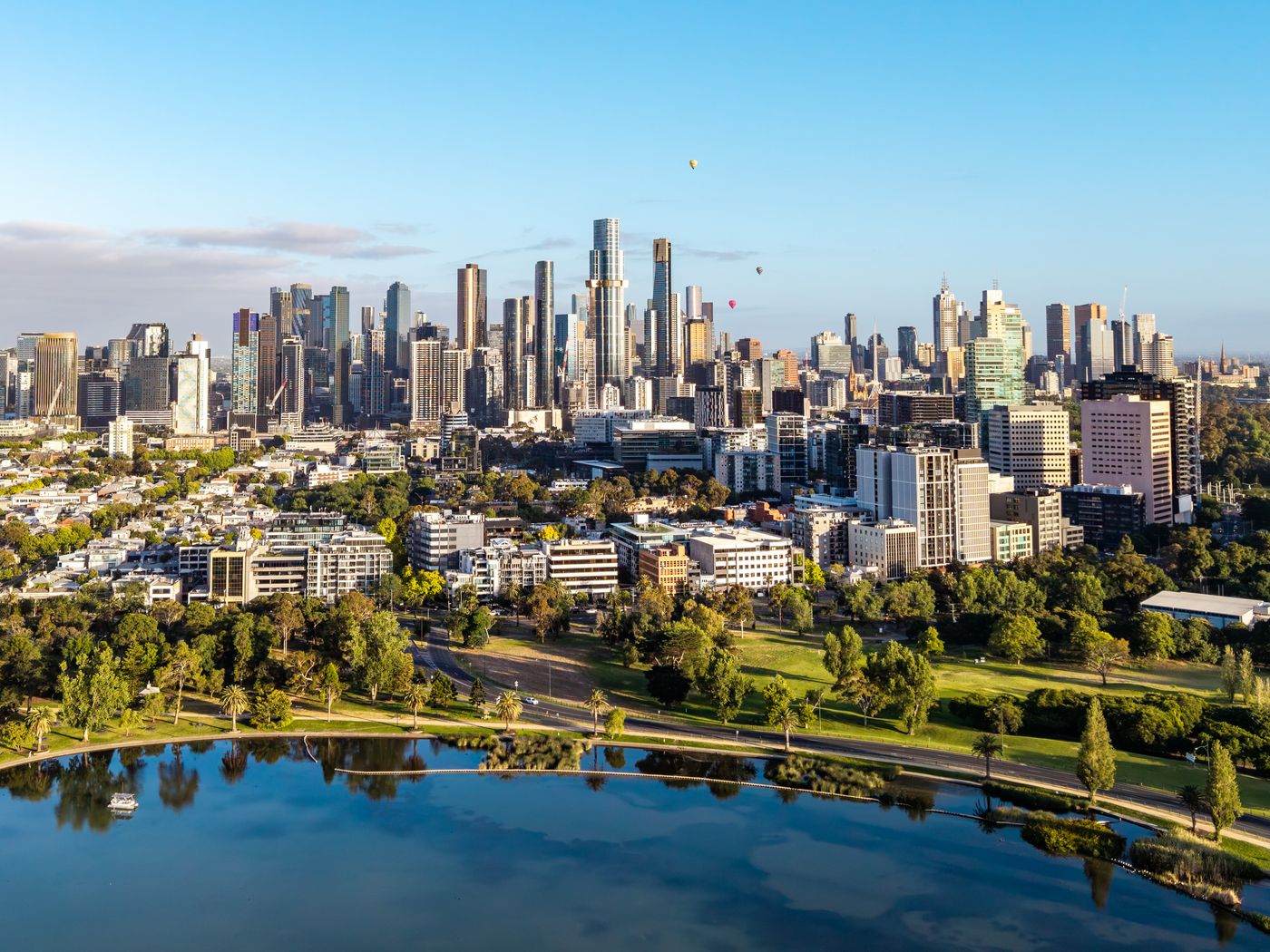
Meanwhile, struggling markets such as Melbourne may finally experience some modest growth this year. As I have said previously, Melbourne’s lagging property market makes it a value city.

There’s no doubt that this city has been badly impacted by some recent government decisions. But Melbourne is still one of the great cities of the world, so, it will catch up to the rest of Australia’s major property markets, this year, or even next year. Certainly, if you’re looking for great value, either now, or in the next three or four years, Melbourne’s probably the best place to do this.

Unfortunately, this isn’t the case in Sydney, which is out of reach for many buyers, especially those entering the market for the first time with a median house value of $1,587,709, according to Cotality’s final Home Value Index for 2025. Even so, Sydney apartments can present a good alternative for buyers and so can nearby locations such as the Central Coast and Wollongong. These two areas feature properties that are well under Sydney’s median value, and most importantly, they give buyers a chance to get into the market, even if they have to say with the Bank of Mum and Dad a bit longer.

As for Darwin, Perth and Brisbane, Cotality’s December HVI reported these markets’ dwelling values increased between 18.3% and 26.9% across the year. In Adelaide, values rose 12.7%. This brings me to a very important point, which a lot of people are asking: will values keep rising, and if so, for how long?

I believe high double-digit increases, year in and year out, can’t continue forever, because you’re either going to see a problem, or the market will need a breather.

In the meantime, I don’t think buyers will get priced out of the market. They’ll just have to be more resourceful and look at different options. For example, they might have to live at home for a few years more, or get a flat mate to help pay the mortgage.

Such options, and others, might not be as hard as people think. After all, property purchasers are already pretty creative and resilient. They’ll find a way to buy, whether it’s obtaining a city apartment, or finding a house outside of a metropolitan area.

Finally, in some good news for property investors, although not tenants, the rental market should experience a positive year again in 2026. Rents are likely to increase by another 5% or more in most metropolitan markets, as the housing shortage continues to keep demand higher than supply.

Also, as new developments start to come of out the ground, this will alleviate the situation in 2027 as well. This is on the back of construction cost increases finally beginning to moderate last year.

Cotality’s latest Quarterly Rental Review also showed low property supply was continuing to drive rental value growth. National rental listings were about 11% lower than a year ago through the December quarter and 17% down on the previous five-year average. And, annual rental growth increased 5.2%, up from 4.8% in 2024.

first home

John McGrath – It’s never too late to buy your first home

By LATEST STORY, NEWS

Commonwealth Bank figures also show that the largest cohort of these buyers (40%) is purchasing property on their own.

High property prices and a housing supply crunch are key reasons for this trend. But there are other reasons for this change as well. Put simply, Australians are waiting longer than their parents and grandparents to not only buy their first home, but also to get married and start a family.

The latest ABS figures show both first-time mums and dads’ median ages (33.8 and 31.9 in 2023) have increased by five to six years since 1975. They are also now having just one child, as compared to two in the mid-1970s.

Large generational gaps are clearly evident when studying home buyers’ approaches to purchasing a property. In a recent report, Cotality described these different approaches as “generational defaults and dealbreakers”.

While this report is based on a US survey, it features some strong home-buying differences between generations. Gen Z buyers initially feel confident about buying a home, but the “cracks” in this confidence show later in the buying process, until by the end, only 73% of this age group say they feel ready to purchase.

Meanwhile, Millennial and Gen X buyers are more cautious. According to the Cotality report, Gen X buyers are the quiet middle sector who are confused but still committed. These buyers are more responsible than younger buyers and want a smart property deal, rather than a fast one.  Millennials are generally comfortable with the buying process, but they can be sceptical about the buying process and their expectations about this process often shift.

The good news is that these points can work in older first-home buyers’ favour. As these “defaults and dealbreakers” suggest, general life experience is a big advantage when house-hunting. For example, there is nothing wrong with being cautious when buying such an important asset as a home, or feeling confused about the many different fees and costs involved in the process.

There is also still plenty of hope for older first home buyers who can offer lenders significant financial advantages that can reduce their loan risk. These points include a long-term career with a good income, good savings, as well as a healthy superannuation and investments.

Under the 2004 Age Discrimination Act, lenders also can’t decline a loan application purely because of a buyer’s age. At the same time, mature first-time buyers are higher-risk borrowers, and Australia’s responsible lending laws may result in lenders baulking at their applications.

There is a key reason for this wariness: older buyers may only have 15 or 20 years to repay a standard 30-year loan before they reach their official retirement age, or in other words, they turn 67 years old, when they can start receiving an age pension.

As a result, and even though this retirement age can differ, depending on the lender, many will decline to write older buyers a 30-year loan.

To counter this issue, I recommend that older first-home buyers have their finances in order before approaching a lender. Obtain pre-approval and conduct your market research. You should also have an excellent exit strategy to give lenders, especially if you’re planning to hold your mortgage after you turn 67. Be prepared to pay off your loan faster than younger buyers, too.

Stabilising interest rates and three rate cuts already this year will also help your cautious confidence.

By John McGrath, Chief Executive Officer of McGrath Estate Agents. 
Powered by Appraise.works